Deep Water, Shallow Skills, and One Great Lake
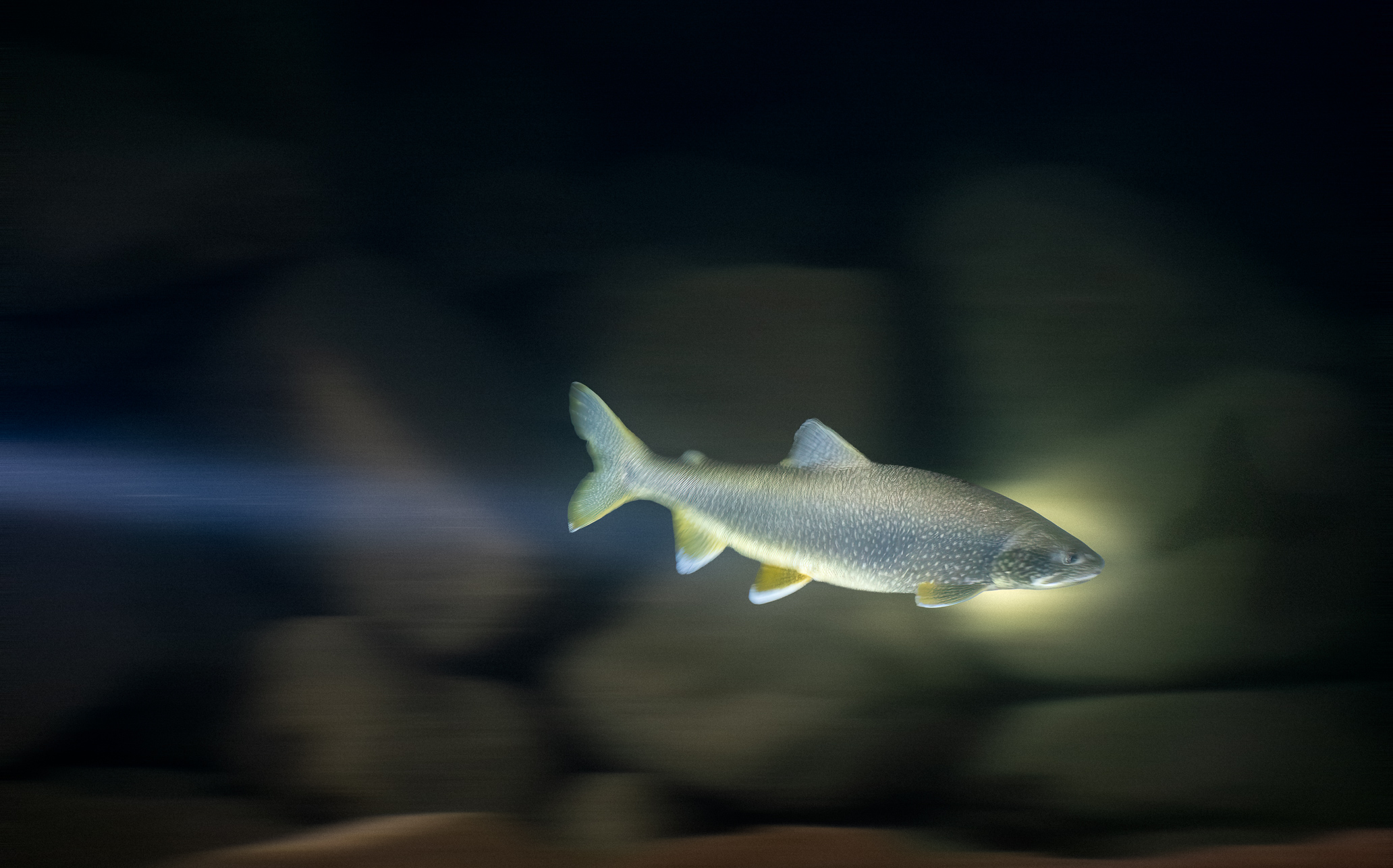
It’s been a lively few weeks in Lake Superior. The water feels charged, as if the whole lake is humming with purpose. It’s spawning season for the lake trout and whitefish—a quiet ritual written into the stones and currents, as old as the lake itself.
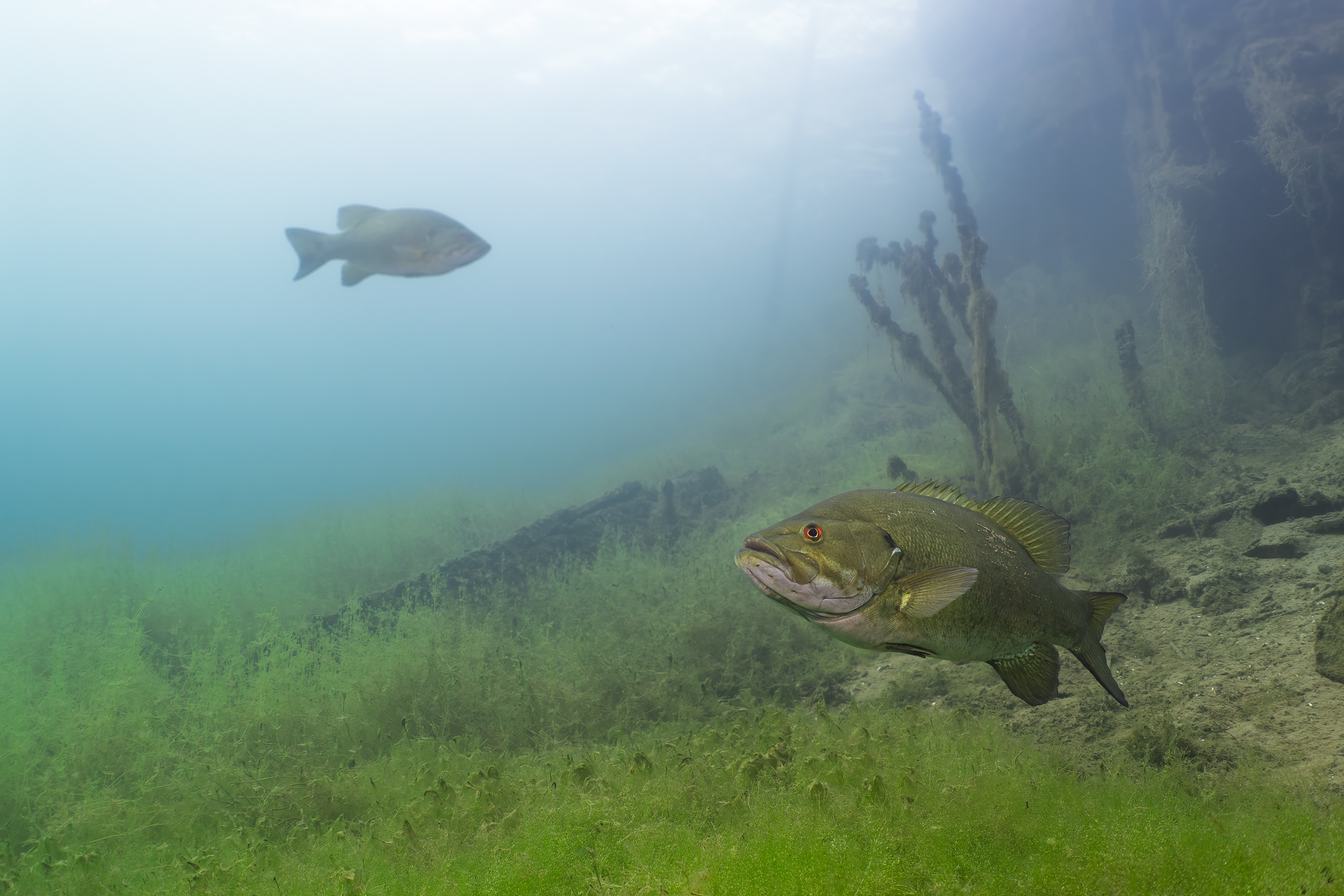
I’d hoped to see the grand spectacle of the lake trout spawn—hundreds of hefty fish converging in some ancient aquatic flash mob. Instead, I found myself alone with a few big trout cruising the shallows, looking as though they’d already missed the main event but weren’t quite ready to go home. Whether I was too early or too late, I couldn’t tell. The fish, naturally, declined to comment.
Lake trout in Superior have a minimalist approach to reproduction. No nests, no fuss—just a good tail-sweep of gravel, a scatter of eggs, and faith in physics. They like their water brisk, around 45°F, and return to the same shoals every year as if checking into a familiar hotel. Whitefish follow later, once things are properly frigid. I saw them on every dive this week, though whether they were spawning or merely thinking about it, I can’t say. Given they often wait for the water to dip near freezing, they’re either incredibly hardy or hopeless romantics.
Lake Superior after dark: the trout are busy, the whitefish are curious, and the divers are mostly just trying not to spook either.
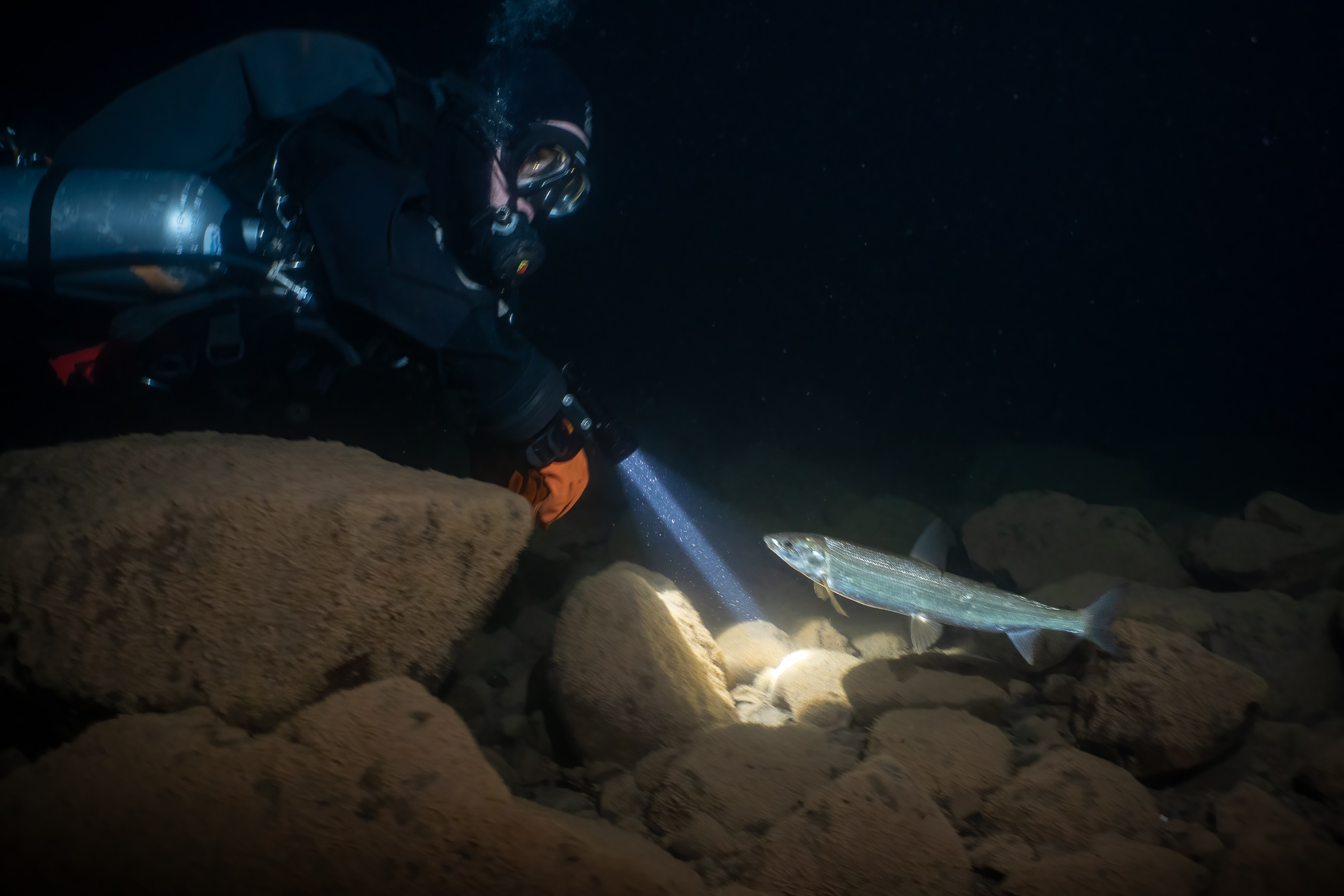
Underwater photography at night is an exercise in logistics and luck. The world beyond your beam is pitch-black, so you search with a dive light—a narrow cone slicing through the void—until something catches your eye. Then the juggling begins: kill the primary light, flick on a dimmed video lamp to give the camera something to focus on, frame the shot, adjust the strobe output, and hope the fish holds still long enough for the shutter to click. I don’t own a proper focus light, so I pressed one of my video lights into service, which proved about as graceful as operating a TV remote blindfolded. Most of the results were a blur of fins and shadows, but now and then, something sharp and luminous appeared, and that made the whole ballet worthwhile.
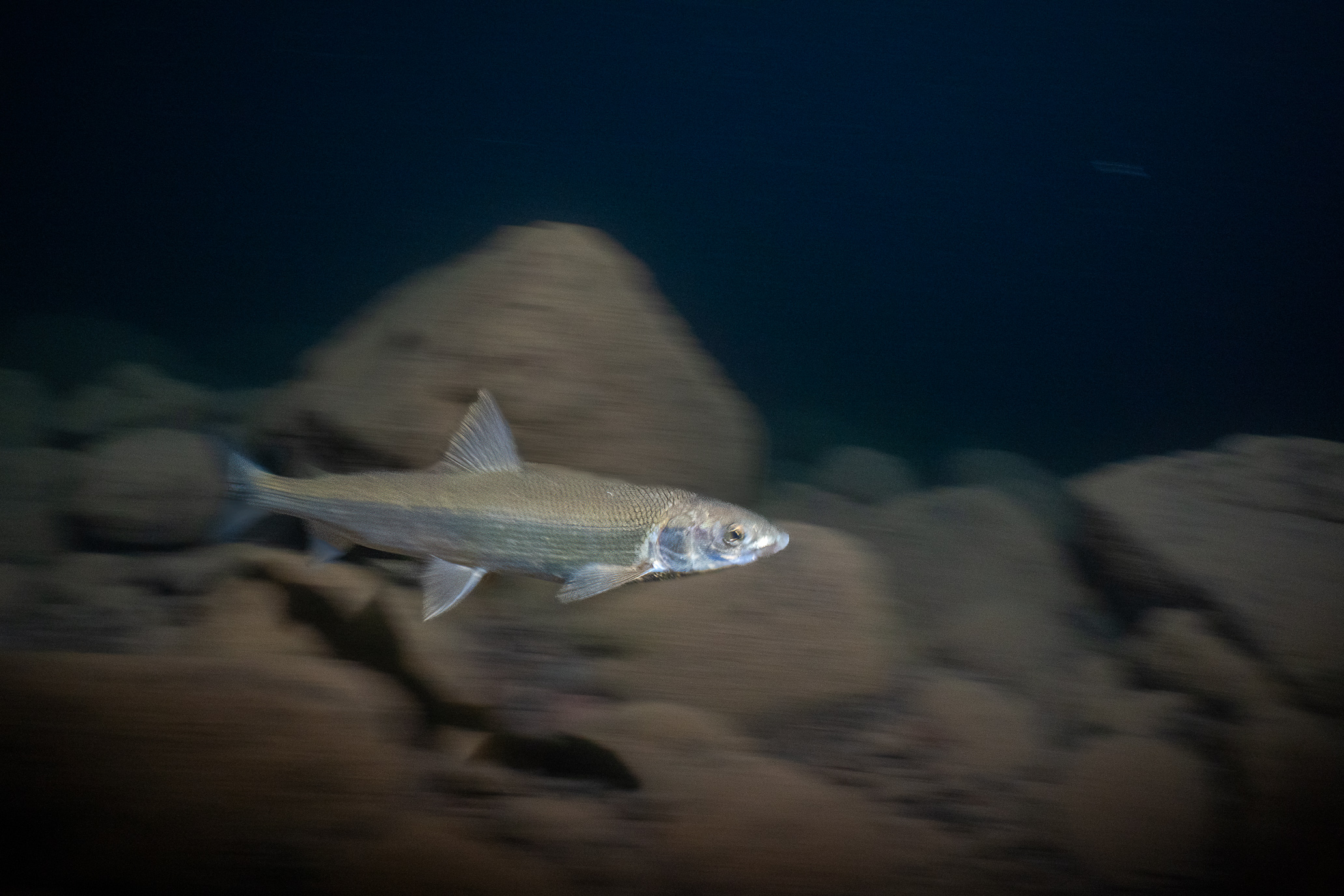
Unbothered by our lights, the whitefish drifted past—proof that after a lifetime in the deep, a few divers with flashlights barely register as news.
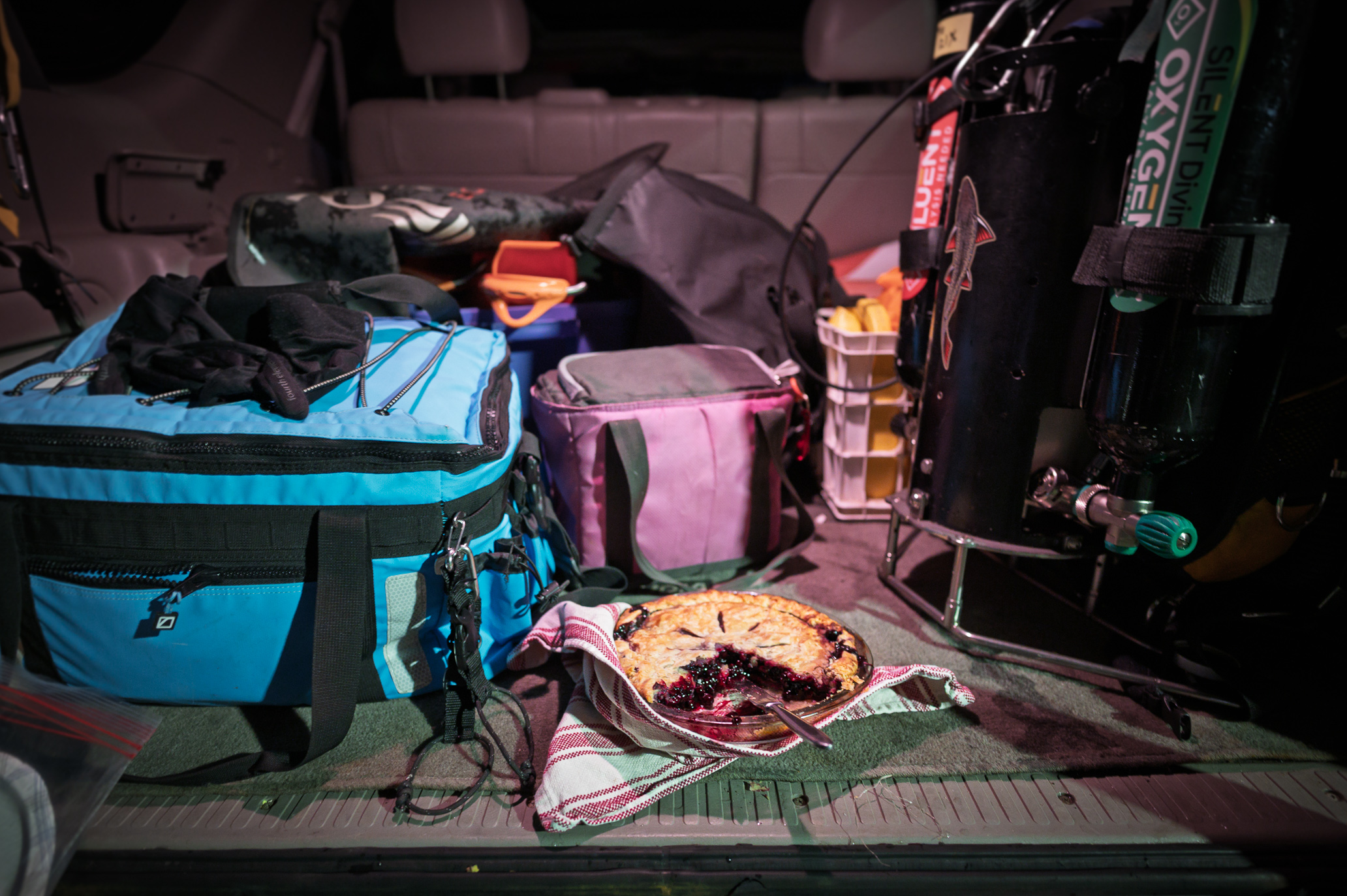
After the dive, Heather produced a blueberry pie, still warm, and we stood there on the shore sipping tea, shivering in the dark, and feeling rather pleased with ourselves. The lake was calm, the air brisk, and the pie perfect. You can’t ask for much more than that.
Proof that the best diving equipment is, in fact, a friend who bakes.
A few nights later I joined Jorie and a handful of divers—eight or ten maybe—for another night dive from the Break wall in Two Harbors, hoping to see more trout. I didn’t know anyone else; introductions are tricky in a dark parking lot with everyone wearing hoods and headlamps. The plan was simple: walk out to the wall, giant stride in, and swim back toward shore. Straightforward, except that “in” was a 60-foot drop into black water.
I ended up buddying with a couple brand-new divers, both certified just that summer. Nice people, keen, full of enthusiasm and in the dark more than a bit of anxiety. She was clearly nervous. It took gentle coaxing from Jorie to get her to take the giant stride off the wall, and when she finally did, there was a small cheer from those of us already in the water.
At the surface, all seemed fine. Then we descended. Or rather, they descended, in the way a dropped wrench descends—arms and legs everywhere, tanks leading the way. Thankfully, there was a ledge at twenty feet that stopped the free-fall, and after some flailing and wide-eyed blinking, they settled down. I hung nearby, pretending not to look like a chaperone, but ready just in case. They surfaced smiling, which was a relief, but I couldn’t help feeling uneasy. I’m no SCUBA instructor, yet even I know Lake Superior at night is not the classroom most agencies have in mind for beginners. Training agencies usually suggest a gentler path: start shallow, practice in daylight, and ideally do it somewhere you can walk in and can see where you’re going. Instead, these two were dropping into a sixty-foot pit of forty-degree darkness. They did admirably, but it felt like watching toddlers take their first steps on black ice.
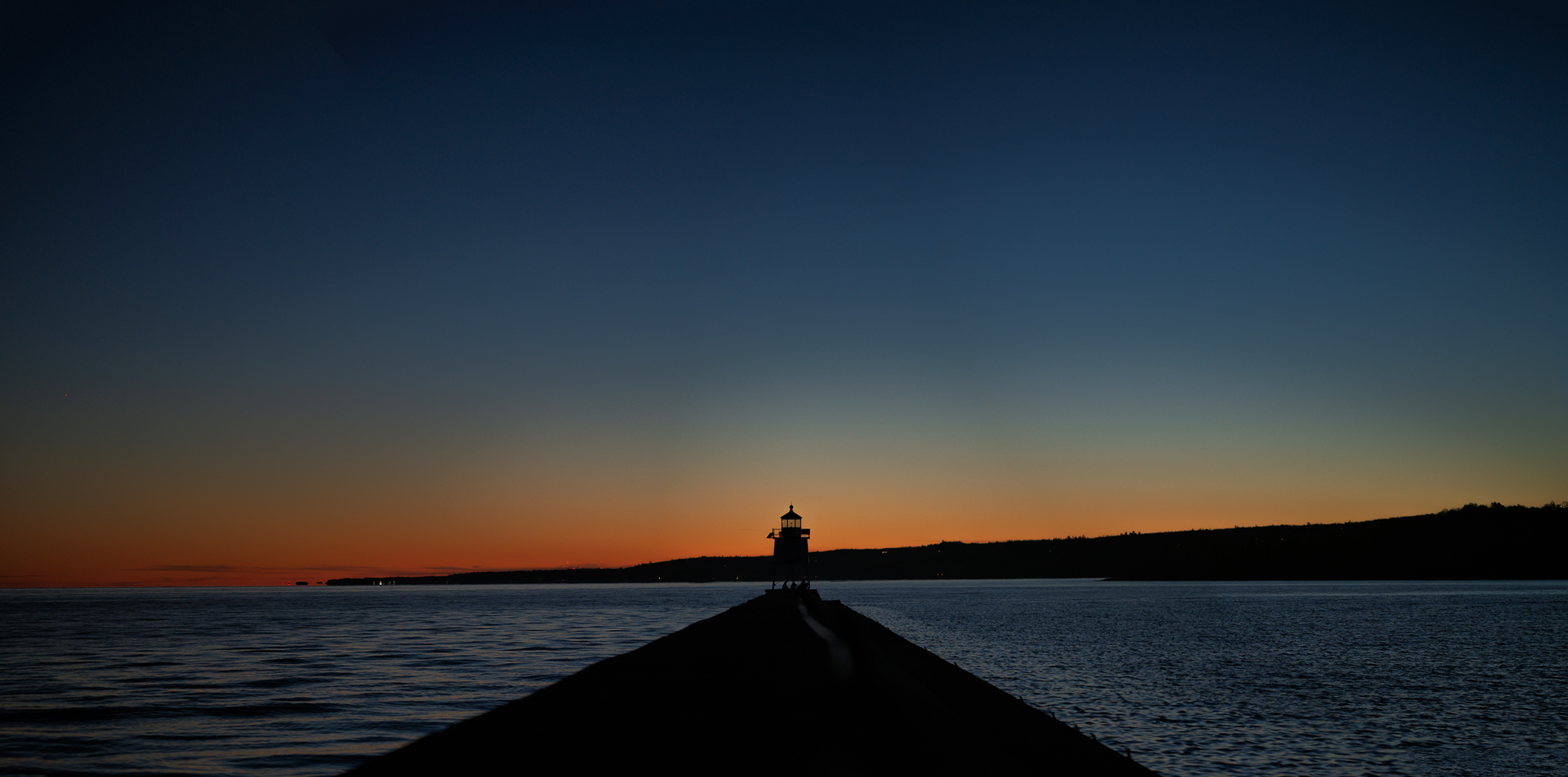
Lovely evening for hurling oneself into an inky black abyss of frigid darkness.
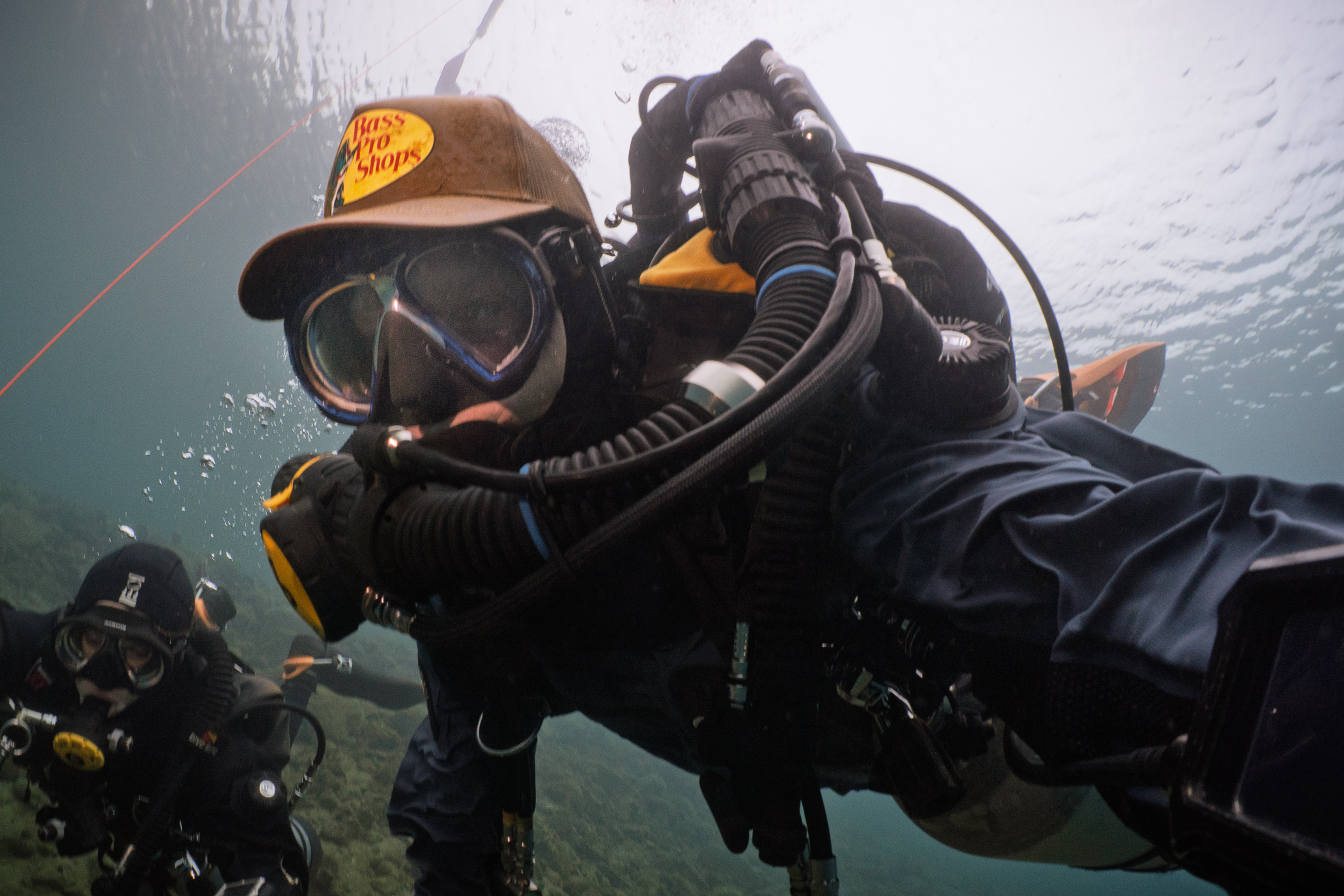
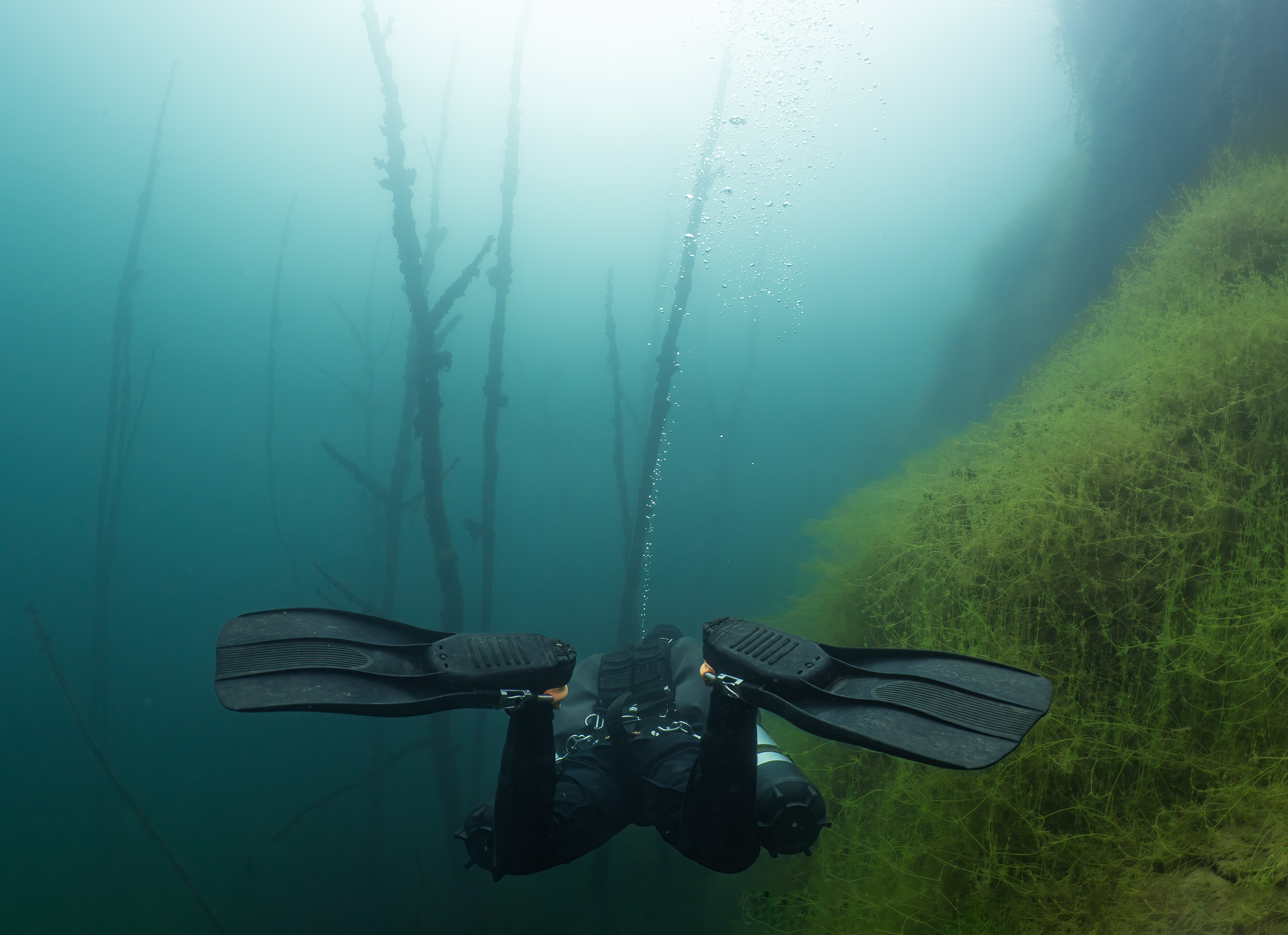
A few days later, Heather and I headed inland to St. James Pit in Aurora. The pits up there are former iron mines—deep, sheer-walled bowls filled with startlingly clear water, the color of old glass bottles. I’d gone hoping to get some video along the wall. The water was calm and visibility spectacular. The dive itself was meditative: slow fin strokes along the vertical rock, bubbles drifting up past rusty ledges and tree trunks that have been underwater for decades. I didn’t get any great footage, but I found a nearly new Bass Pro Shop hat at twenty feet—still had the cardboard insert behind the logo. You take your victories where you can find them.
That dive also ended up being one of my deeper ones—somewhere around 130 feet. I felt the narcosis come on at about 110, that slow-motion, pleasantly tipsy sensation where your thoughts take the long way around the block. I surfaced with all my faculties intact but reminded once again that depth, like gin, is best taken in moderation.
A day or two later I tried Gooseberry Falls, baiting the lake with chunks of freezer-burned salmon in hopes of attracting sturgeon. The only thing I attracted was disappointment. After an hour of waiting at fifty feet, I surfaced having seen nothing but wet rocks and driftwood. The lake is nothing if not consistent in its indifference.
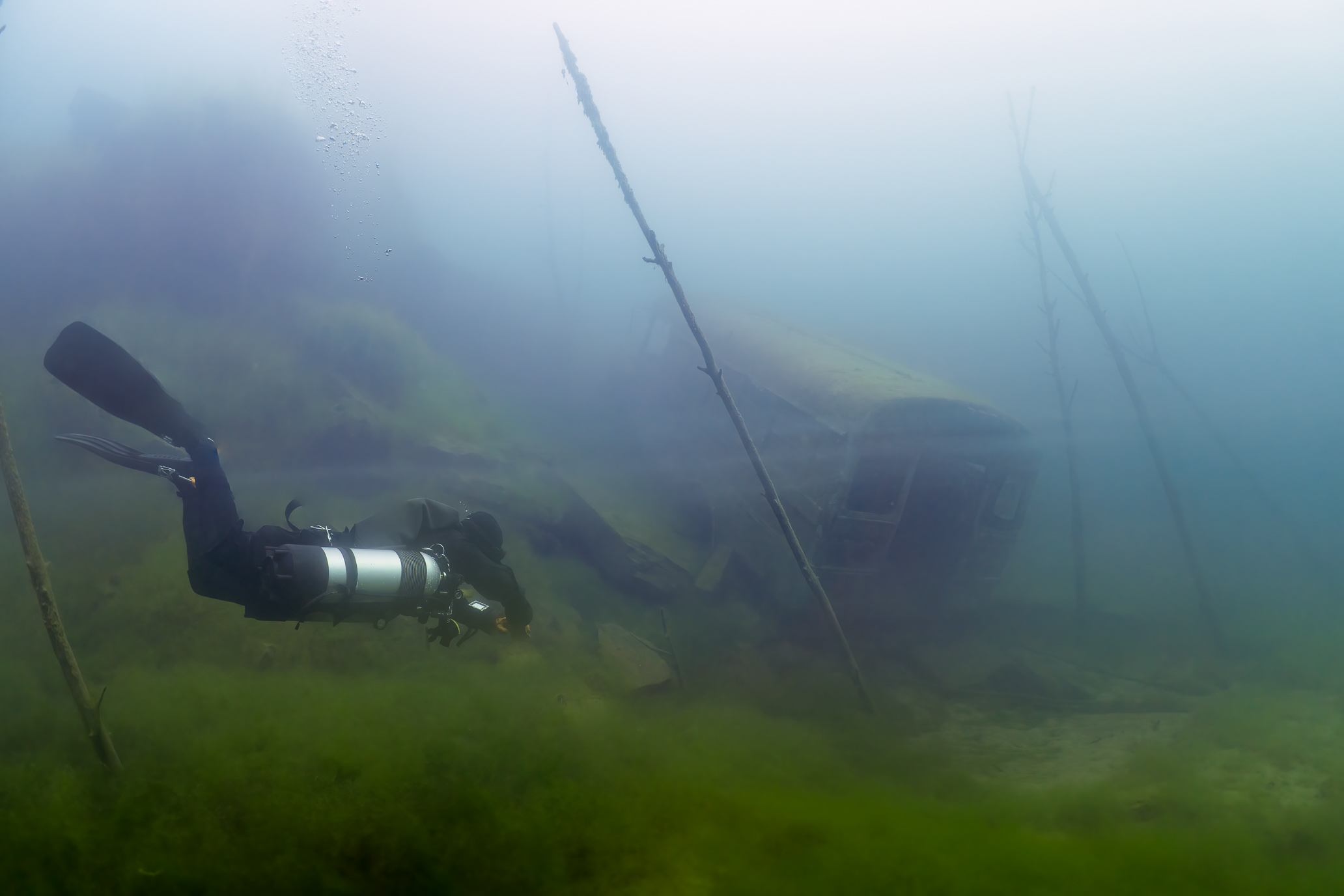
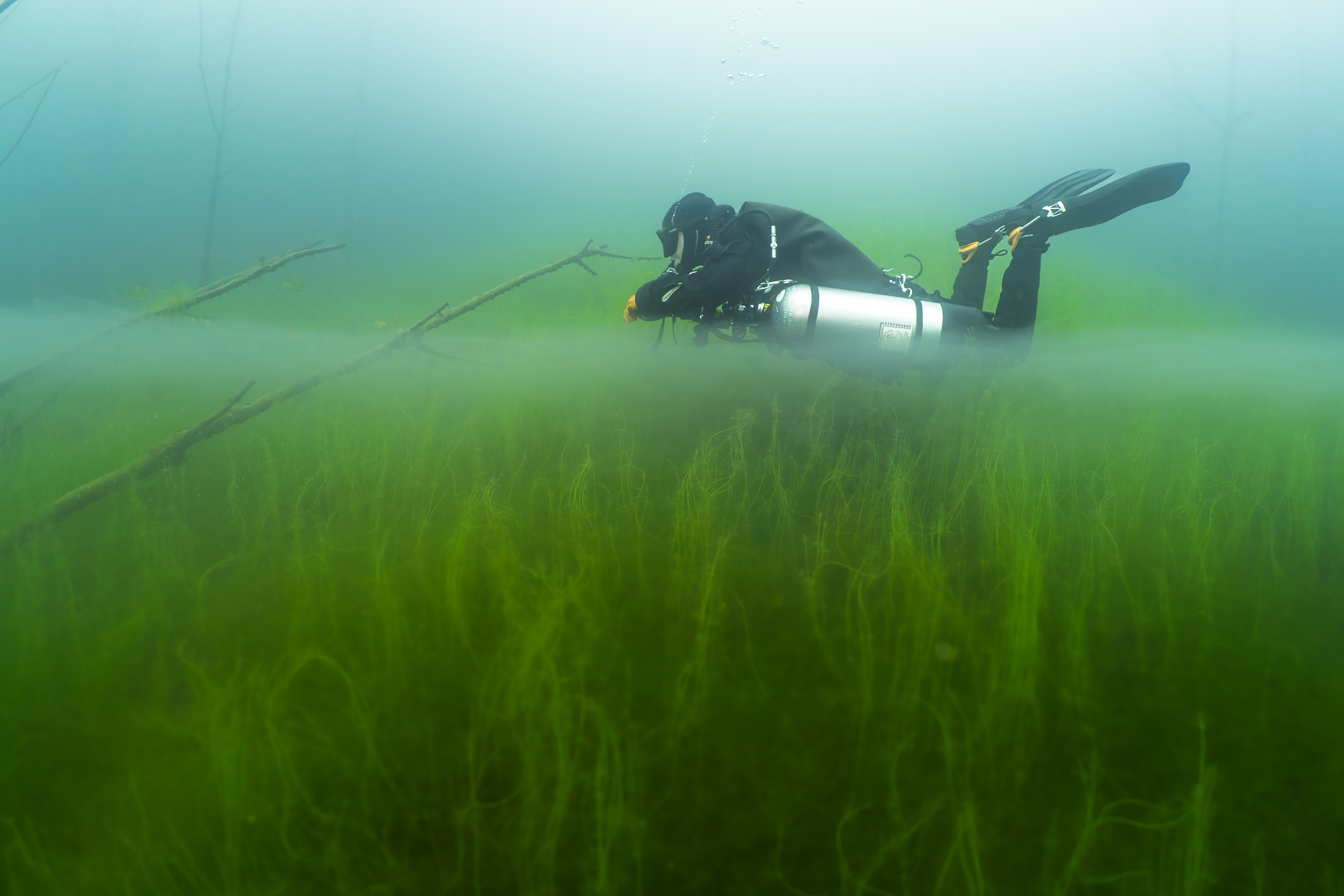
To finish the week, Heather and I made a quick trip up to Lake Ore-be-gone in Gilbert—one of those dives that feels less like exploration and more like a slow wander through a dream. We slipped in from the boat launch and drifted past the local landmarks—a sunken helicopter, a school bus—before meandering along low rock walls and through a submerged forest alive with bass and the occasional, suspicious-looking pike. Around thirty-five feet down, a soft, milky haze marked the thermocline—the invisible border where warm surface water gives way to the cold depths. Crossing it is like swimming through a ghost: the light shifts, your skin prickles, and for a moment the lake feels immense and ancient.
The dive wasn’t entirely uneventful, though. My backup computer, which I rely on to read cylinder pressures, decided to stage a mutiny and spent the most of the dive flashing “No Comms.” Shearwater, the manufacturer, suggested it might be a faulty antenna, though I suspect it could have something to do with my rebreather’s recent acrobatics off the back of my car. It hit the parking lot with the kind of thud that makes you sick to your stomach, but it survived, and performed perfectly for two dives afterward—so who knows.
Then, near the end of the dive, one of my oxygen cells abruptly quit, dropping to zero like a power outage. Probably a connection issue, but the rebreather did what rebreathers do best: it let me know loudly and insistently. My handset flashed warnings, lights blinked, and an alarm squealed underwater— audible, at least to anyone whose ears haven’t entered the Presbycusis years, but apparently crystal clear to Heather, who endured fifteen minutes of electronic nagging with admirable patience. I tried to fix it underwater but eventually gave up, figuring the workbench at home would be a better setting for delicate electronics than forty-degree water.
Despite all that, it was a lovely dive—slow, serene, and oddly comforting. The sort of dive that reminds you that even when the gear acts up, the lake itself never does.
Looking back, it was a good week beneath the surface. I found a few fish, learned a little more about their seasonal routines, and produced my usual gallery of slightly unfocused masterpieces. Onshore, I finally won my quiet battle with the postal system: after five identical shipments of the wrong size, my long-awaited medium cold-water hood arrived. It fit perfectly, which somehow made up for every missed photo and murky dive.
If the lake taught me anything, it’s that it doesn’t need an audience. The trout will do their ancient dance, the whitefish will drift in later, and new divers will continue to bob uncertainly on the surface. All we can do is keep turning up, adjusting our gear, and paying attention—because sometimes, even the smallest victories, like a properly fitting hood, feel like communion with something vast.