Turning Back the Clocks, Not the Light
Fall is slipping quietly away this week, like an old friend backing out the door mid-sentence. The mornings arrive rimmed with frost now, the kind that makes the grass crunch beneath your boots, and the breath hang around your face like you’ve stepped into a photograph. The trees, once ablaze with color, have given up entirely. Their leaves lie matted and brown, the last confetti of summer’s long party.
And then, of course, there’s the time change. I hate it. Everyone cheerfully announces that you “get an extra hour of sleep,” as if we all reset like microwaves. I don’t. My body clock is a stubborn, prehistoric thing. I go to bed at ten, I wake up at 4:30 instead of 5:30, and then I lie there, wide awake, furious at my own circadian rhythms. I already work hard enough to get a decent night’s sleep without the government meddling with the clocks twice a year. It feels like some small, bureaucratic cruelty, disguised as a gift.
Work was slow this week—quiet to the point of stillness—and I found myself unexpectedly at home midweek. I decided to turn the unexpected freedom into labor. Out came the tools, and down came the old treehouse, the one I built when the kids were small and I still thought bolts and plywood could hold time in place. The structure had long since surrendered to rot and gravity, but dismantling it still felt a little like disassembling a memory.
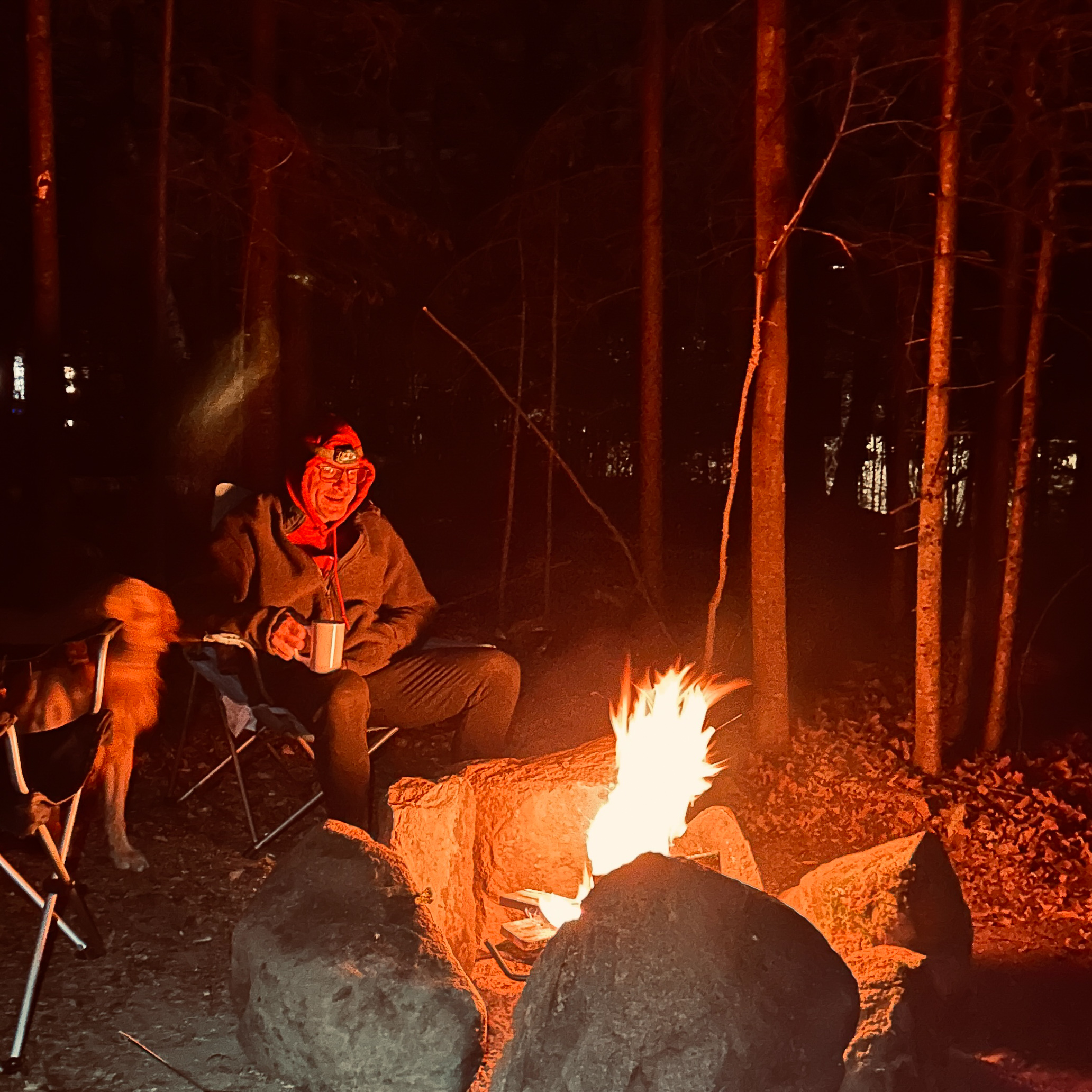
I cut the wood into pieces fit for a fire pit and gathered stones from around the yard, rolling a few behemoths that must have weighed three hundred pounds apiece. It turned into an impromptu workout and an oddly satisfying one. By dusk, I had a new fire ring—crude but solid—and the smell of woodsmoke rising from the first fire made it all feel worthwhile. Grace gets the credit; she wanted something proper for her upcoming holiday gathering. The propane fire table, apparently, lacks the necessary soul.
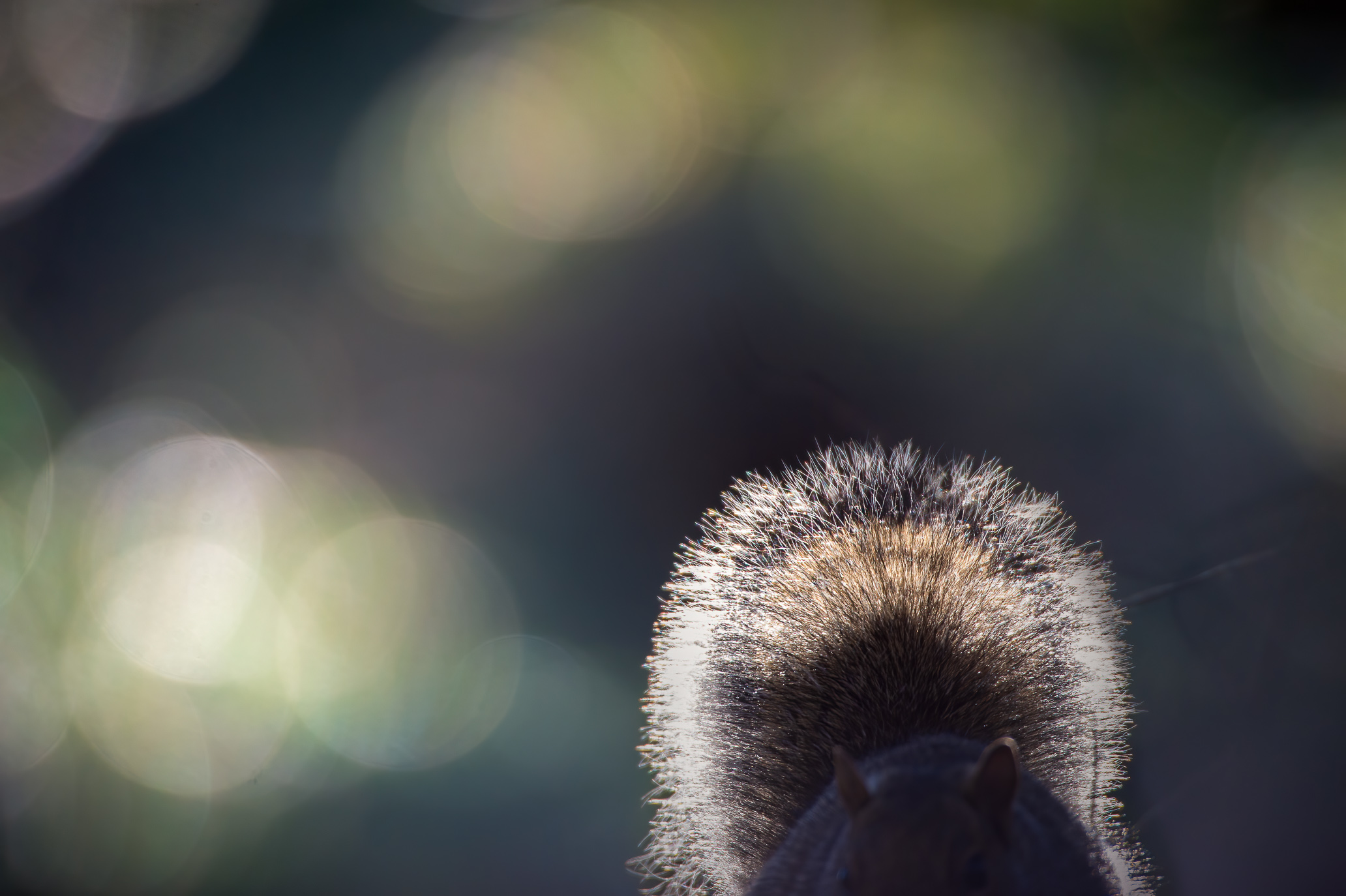
Later in the week, I dusted off my Nikon and tried my hand at some backyard photography. The birds weren’t cooperative, but I caught a squirrel’s tail, glowing softly in the backlight. It wasn’t much, but it felt good to shoot something topside again. I’ve been consumed lately by underwater photography—obsessed really, in that way I tend to go all in with hobbies. I throw myself in headfirst, full throttle, until the world narrows to just that thing. Diving, for the past few years, has been that thing.
I went looking for birds and got a squirrel’s backside instead. Life’s funny that way—you don’t always find what you’re after, but it’s usually worth showing up anyway.
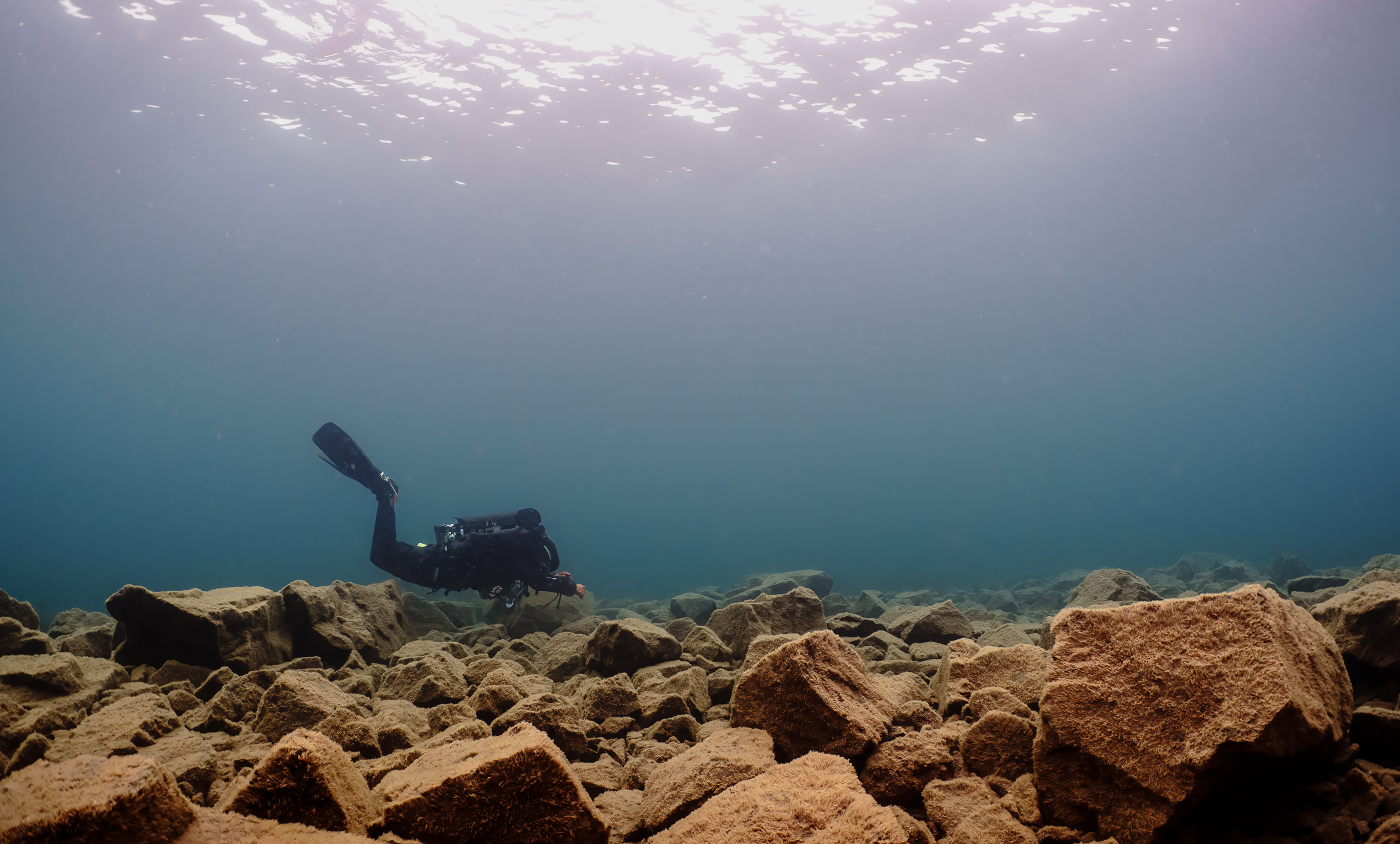
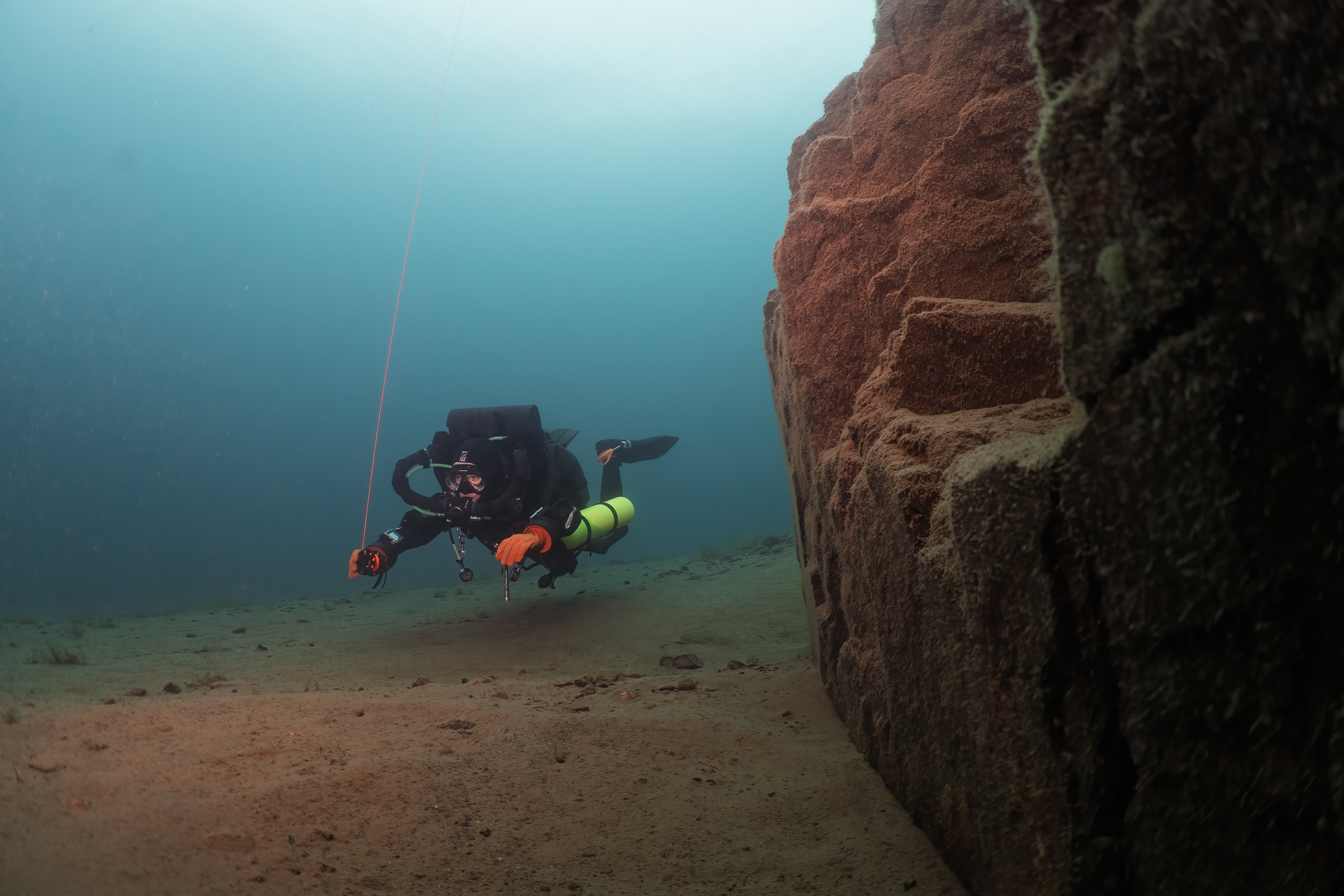
Heather and I dove the Madeira on Monday. The lake greeted us with its usual mix of hospitality and hostility: 38 degrees, clear but bracing. Yet once submerged, everything felt calm, the world reduced to the pitter patter of the rebreather and the slow ballet of fish. Schools of tiny fry shimmered in the beam of my light, and a few lake trout ghosted by. I decided to make a video of the day—shot it all in motion this time, no stills—and spent the evening stitching it together into something I rather liked. Editing underwater footage is its own quiet reward; you build a world from bubbles and light. Few people ever care much for the finished product, but that’s all right. It’s the making of it that keeps me returning.
Today’s dive was less grand but no less satisfying—The Two Harbors break wall, cold and clear, the kind of dive that feels more like meditation than adventure. We wandered off the usual route and found a few relics half-buried in the silt: a twisted plate of riveted steel, an anchor point from some long-lost industrial venture. Useless artifacts now, but in Lake Superior’s vast, empty expanse, they feel almost like treasure.
Two Harbors: 38 degrees, zero drama, and a surprising amount of joy found poking around underwater junk.
It’s easy to lose yourself this time of year—to let the darkness seep into your bones and convince you the light is gone for good. But I’m learning to look for it, wherever it hides: in the shimmer of ice crystals on the lake’s surface, in the flicker of a campfire, in the glow of a photo taking shape on a cold afternoon. Winter is coming, yes—but it needn’t be bleak. There’s light still, if you go looking for it. Sometimes even underwater.