Post-Christmas Calm, frozen valves and the God of Thunder
The holidays ended the way they always do: abruptly, quietly, and with the faint sense that someone has turned off the background music. The Christmas tree vanished, the calendar flipped, and winter—perhaps momentarily satisfied with its work—eased off the throttle. It’s been cloudy but relatively warm for a week now, which in Minnesota winter terms means “comfortable enough to consider getting wet,” especially after what New Year’s Day had in store.
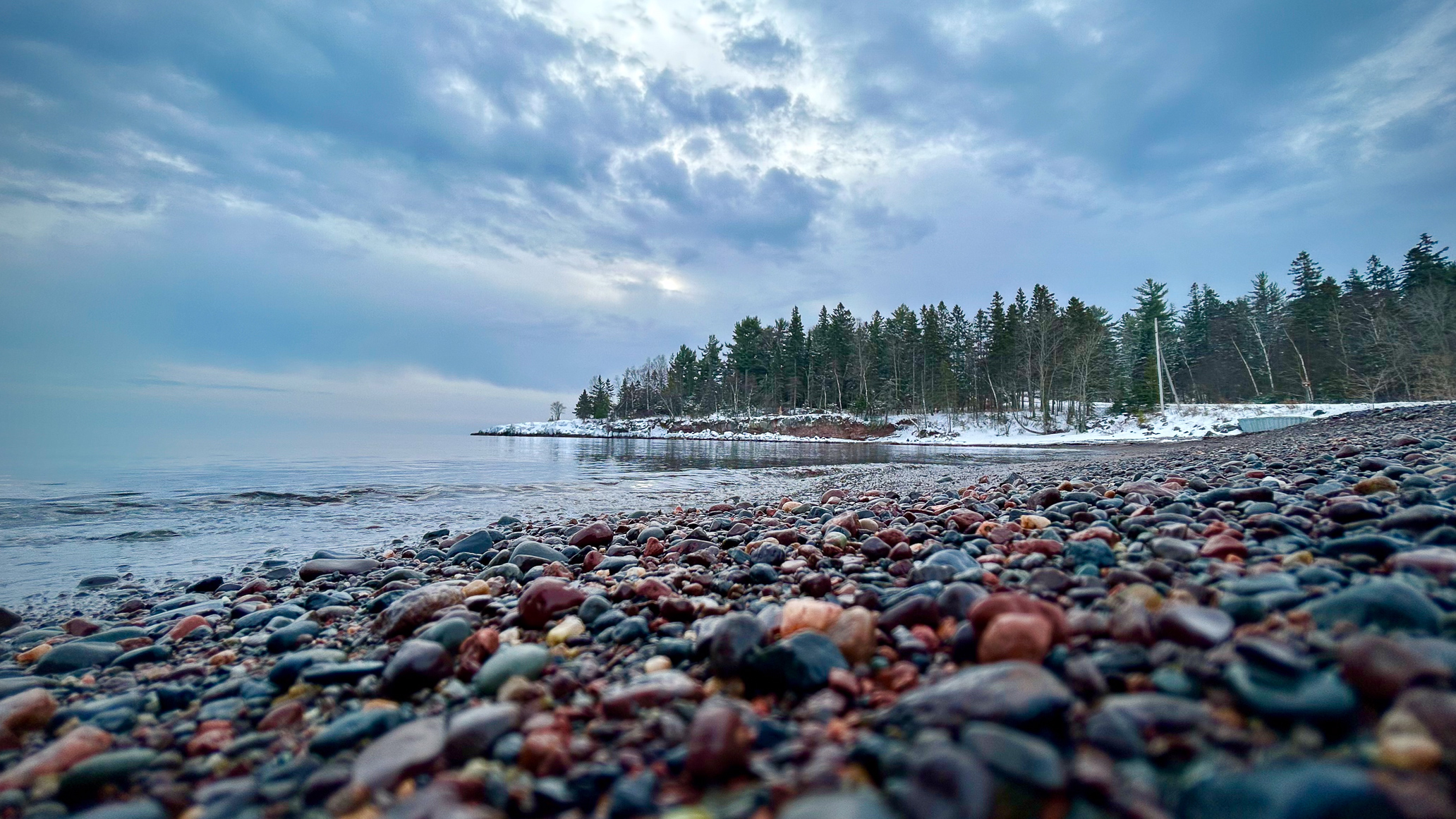
New Year’s Day diving is a local tradition. It’s less about the dive itself and more about starting the year with friends, shared suffering, and the promise of something warm afterward. This year, the lake held steady at its usual winter temperature, but the air most definitely did not. The high was 5°F, with a wind chill that felt personally insulting. I very nearly stayed home. The dive itself is manageable—the trouble comes afterward, when you surface and discover that everything you own has flash-frozen into a single, uncooperative sculpture.
Five of us showed up: Heather, myself, Adam, Paul (our local instructor), and Steven. Between free-flowing regulators, frozen zippers, and gear that simply refused to cooperate, only Heather and I actually made it into the water. We were also the only two diving rebreathers, which—while better suited for cold water in many ways—are still vulnerable during those minutes of exposure before submersion.
My own reminder came immediately. When I put the mouthpiece in for my pre-descent prebreathe, nothing happened. No airflow at all. Both non-return valves were frozen shut. Standing chest-deep in the lake, I submerged the mouthpiece and waited, letting the comparatively “warm” 38-degree water thaw things out. Eventually, the loop came back to life.
This is not an ideal start to a dive. Non-return valves exist for an important reason: they ensure gas flows in one direction through the scrubber. If one fails open—or worse, tears—you risk a rapid CO₂ buildup. Hypercapnia announces itself rudely: labored breathing, pounding headache, confusion, and then things get very serious very quickly. The dive itself was short and conservative—about half an hour along the Two Harbors breakwall, never deeper than sixty feet—but I spent the entire time listening closely, attuned to the faint, reassuring slap of each valve opening and closing. The dive was uneventful, which in rebreather terms is the highest compliment you can give.
Right up until the surface.
According to my rebreather controller, I’ve been underwater for 241 minutes and currently at 4.6 feet. I’m in my garage. Apparently winter has suspended both physics and reason.
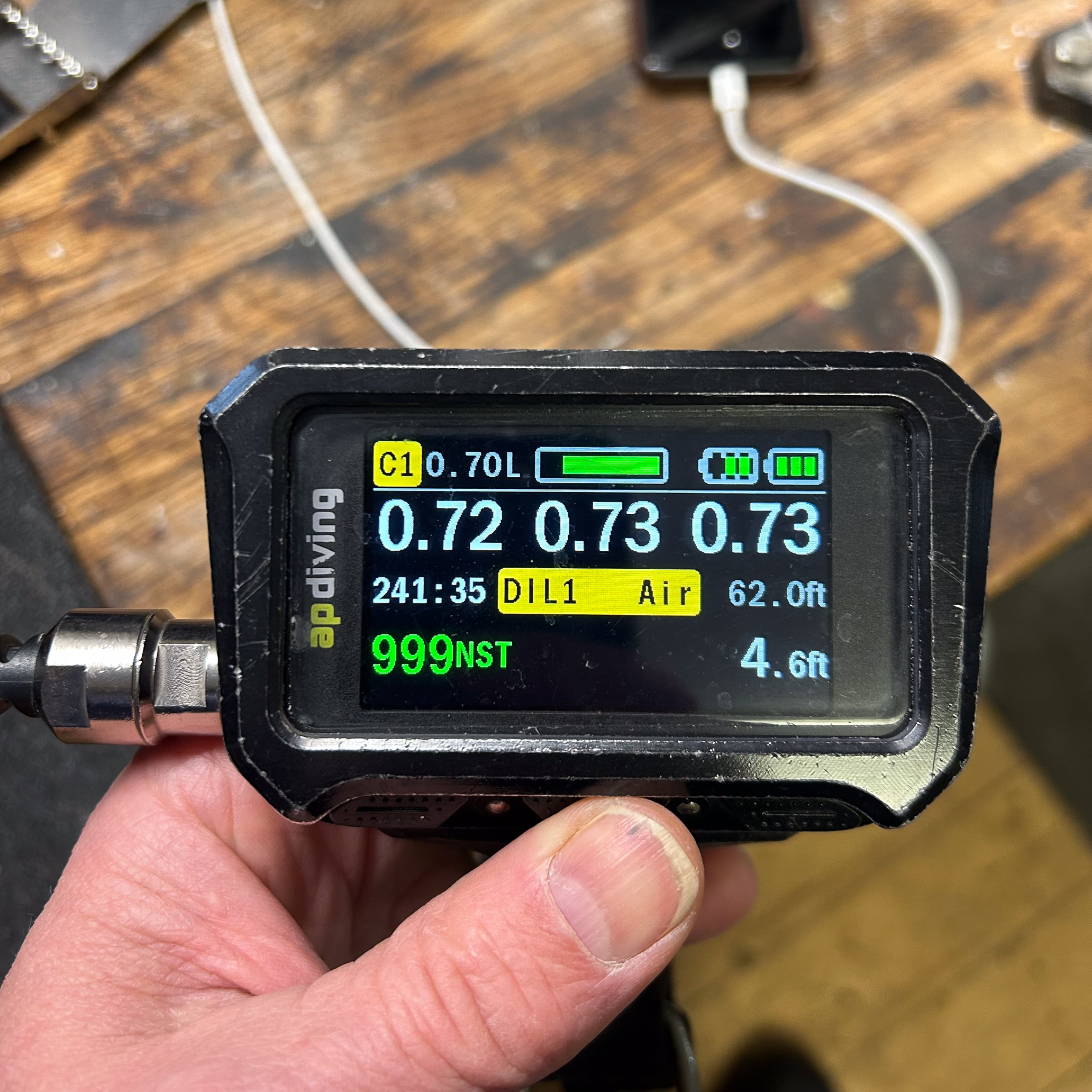
As we ascended, I noticed my rebreather controller disagreed with my backup computer by several feet. At the surface, the controller still thought I was four feet underwater, which meant it refused to shut off. That’s good design—preventing divers from turning off their life-support computer underwater—but less helpful when you’re very clearly standing on shore. I eventually had to insert the isolation clip to disconnect the battery entirely. Later, once everything dried out and warmed up, the unit regained its senses, connected via Bluetooth, and behaved as if nothing had happened. Which I suppose is the best possible outcome.
Thankfully, the following dives were gentler. Temperatures rebounded into the twenties and thirties—practically tropical by comparison—and we enjoyed a relaxing, shallow dive in Burlington Bay. We never went deeper than twenty-five feet and somehow surfaced with twenty-four golf balls, further supporting my theory that Burlington functions as a submerged driving range.
Adam joined Heather and me for a dive at Gooseberry, a site I return to again and again for the rock formations—and the faint hope of another sturgeon sighting. After seeing them on four consecutive dives last summer, I’ve developed wildly unrealistic expectations. Sturgeon, it turns out, are freshwater unicorns. No one I know has seen one. I’ve somehow seen several, which I mention only because I will continue mentioning it forever.
It was great diving with Adam. He moves through the water with the kind of trim and calm I’m still trying to perfect. As it turns out, he grew up in Pierz, Minnesota—two blocks from my grandmother’s house, where I spent nearly every weekend of my childhood. A genuinely small-world moment. I texted him later to see if he wanted to join us for a dive off the Madeira. His response was a GIF of Thor, helmeted and triumphant, yelling “YESSSS!” I love the Marvel movies. I don’t know Adam well yet, but I have a feeling we’re going to get along just fine.

When you invite someone diving and they reply like a Norse god accepting a quest. Hard to argue with that level of commitment.
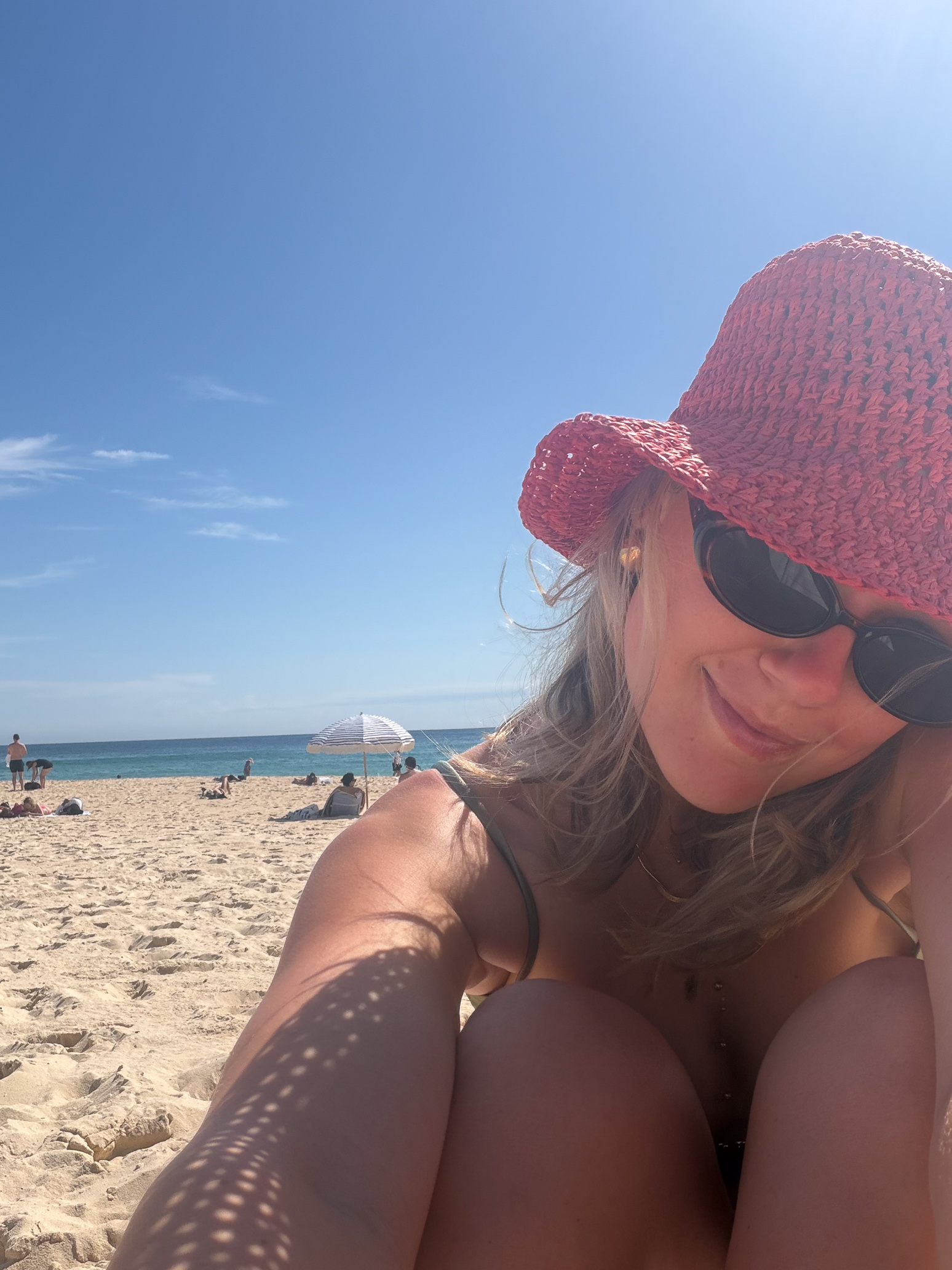
The diving continues, despite it being the heart of winter. It’s good for me. Necessary, even. Though I’ll admit it’s not quite as appealing as spending January in Sydney, Australia—which is exactly where Isabel is right now, “studying” abroad. One class. Lotsa sun and sand. I couldn’t be happier for her. Watching your kids do the things you never quite managed yourself is a strange and wonderful experience. I do still wish I’d gotten her into diving, though. I mean… the Great Barrier Reef.
So it’s been a busy couple of weeks, but we’ve arrived at my favorite part of winter: the post-Christmas calm. And as the Australians say—
No worries, mate.