Ghosts of the Chain Locker: A November Dive on the Madeira
It’s late November now, the air crisp enough to snap the nose hairs, and I can practically hear the Christmas lights flickering into life up and down town. Last night was the Christmas city parade, full of thrumming joy, and this morning brought frost, brittle and pale, with daytime highs stubbornly hovering in the 20s. The kind of November that feels like a bridge between seasons, or maybe between moods.
Over the past couple of weeks, I’ve carved out a bit of time for diving and some backyard photography—my little escape hatch from the gray. But winter’s sniffles have crept in too, a lingering head cold, sinus congestion, sneaky sore throat. Grace swears by the neti pot—I’m learning. It’s a weird little contraption, this bulb-and-salt-water business, but there’s something satisfying about flushing your head out. I’m cautiously buying in.
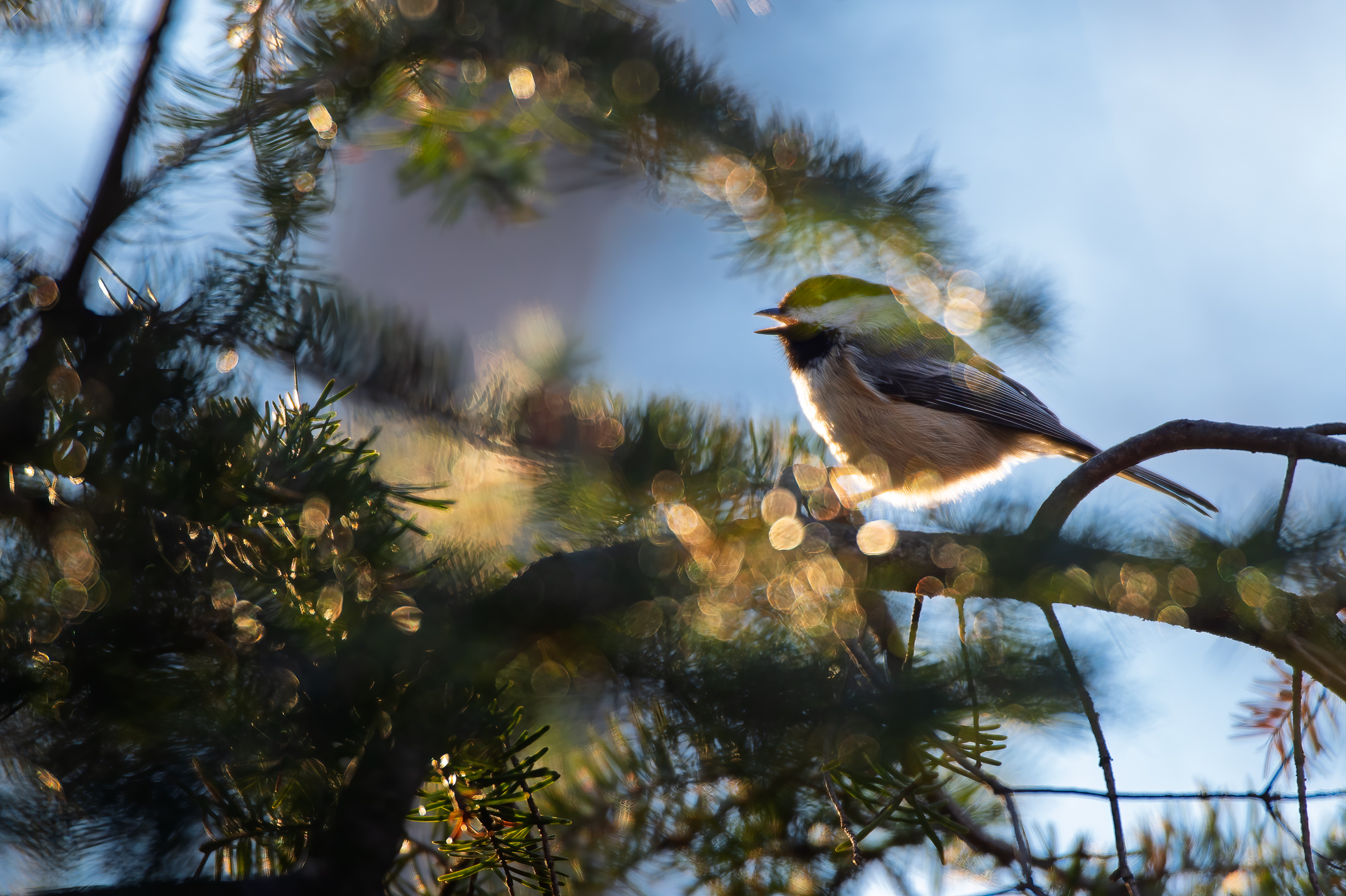
My favorite backyard bird, mainly because they always show up. Getting them to hold still is another matter entirely. They're like caffeinated acrobats with somewhere urgent to be.
Still, for all the crud in my sinuses, my ears have cleared for diving, which felt like a small miracle. Heather (my dive buddy) and I made three forays: the Madeira, Gooseberry, and a damp, gloomy dive from Brighton Beach. The Madeira, as always, is a favorite, though this trip made me work for it.
To get there, we haul our gear down a steep hundred-yard trail from the parking lot, in several trips. Today’s challenge: Heather discovered her canister light’s mounting plate had come off—so the light was just dangling by its cord, with no way to secure it. We were chest-deep in Lake Superior, carrying well over a hundred pounds of gear apiece. Given her load, I volunteered to run back to the car for a screwdriver. I left my rebreather on, but ditched my bailout, and slogged up the hill with a 70-lb pack over my shoulder. Once I fixed the plate, we made our way into the water.
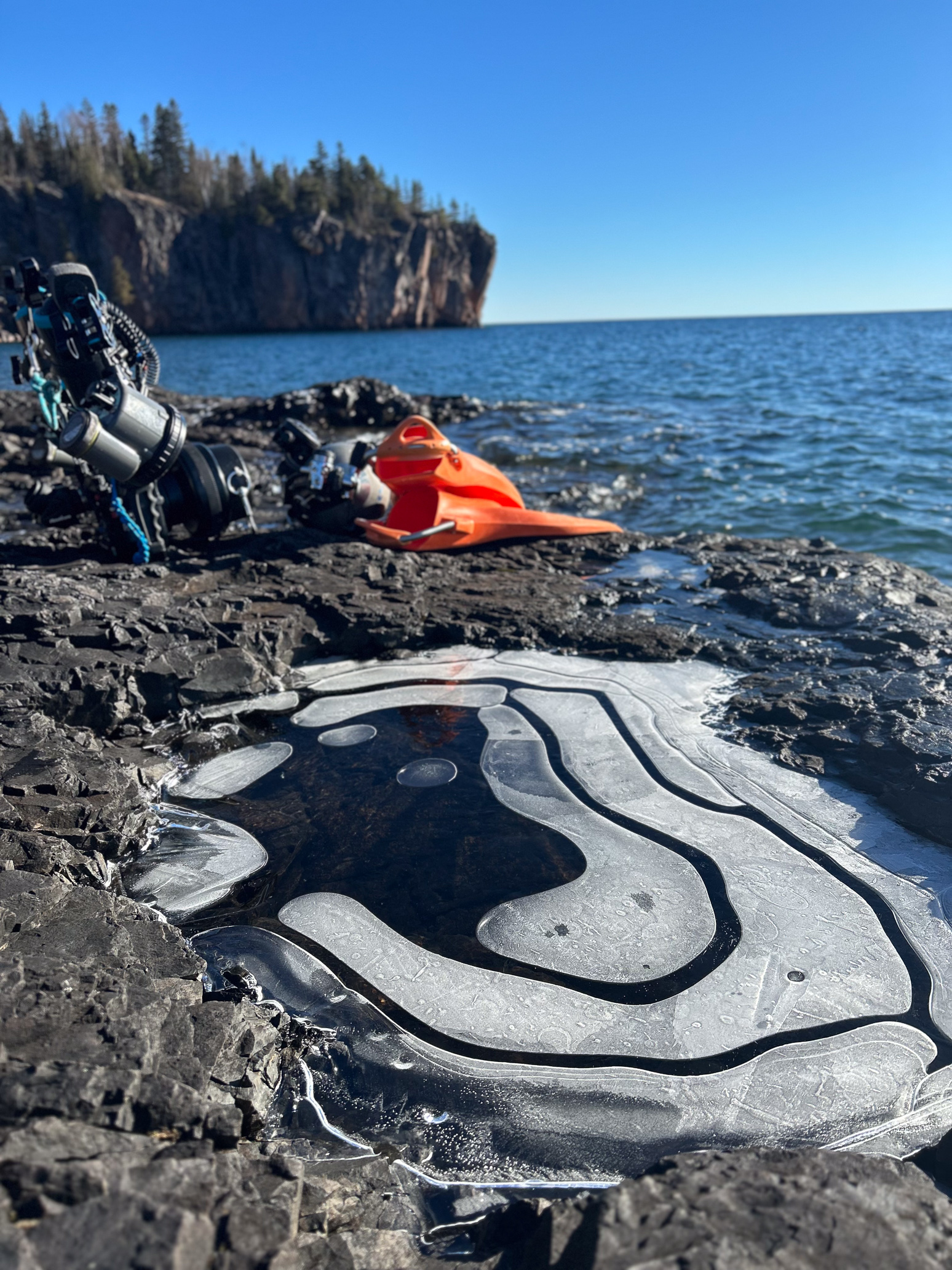
Nothing says “good morning” like finding your dive site frozen before you are. The puddles turned to topographic maps of ice, yet there I was—prepping to hop into water only slightly less frigid. Lake Superior has a talent for reminding you that humans are profoundly silly creatures.
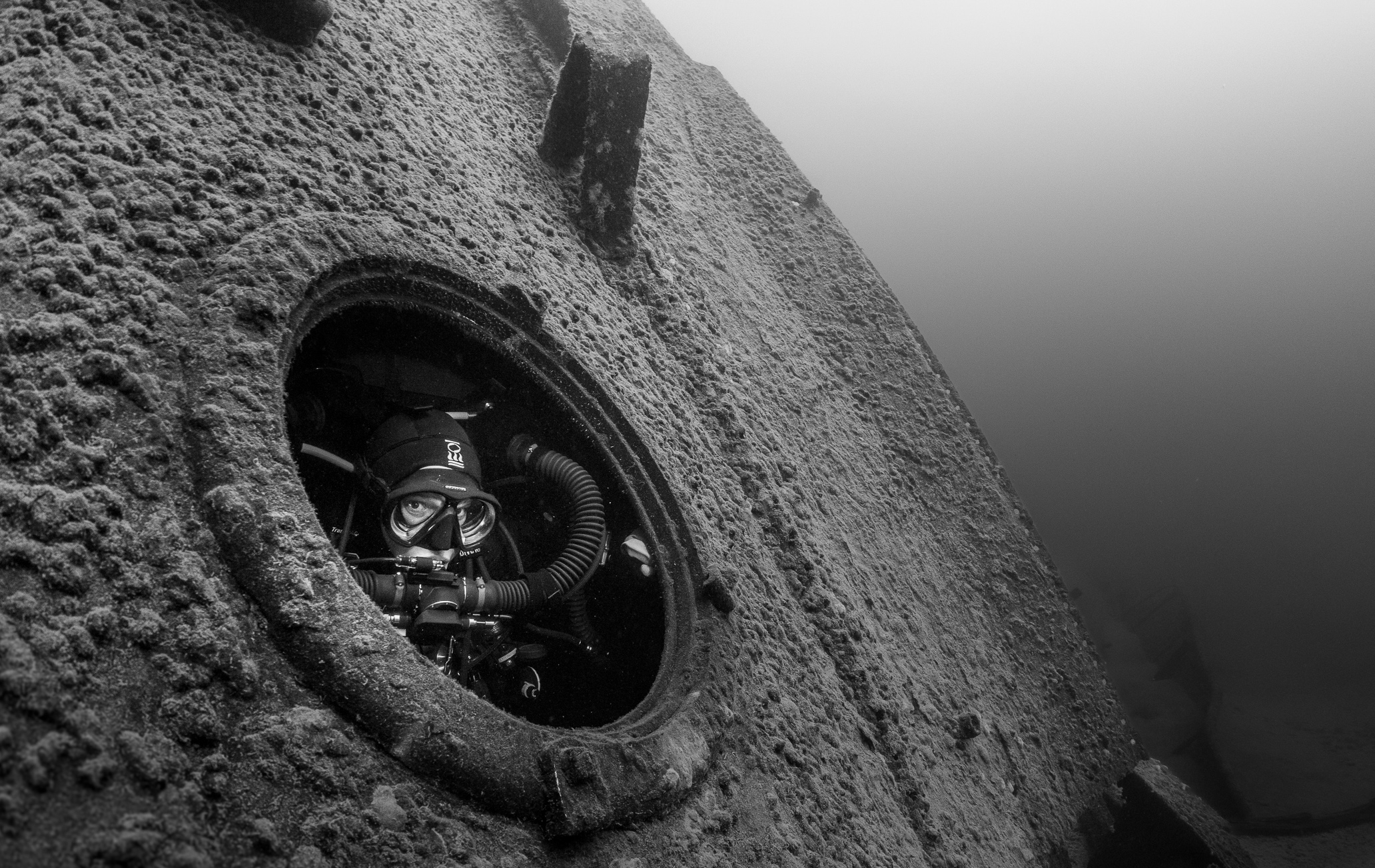
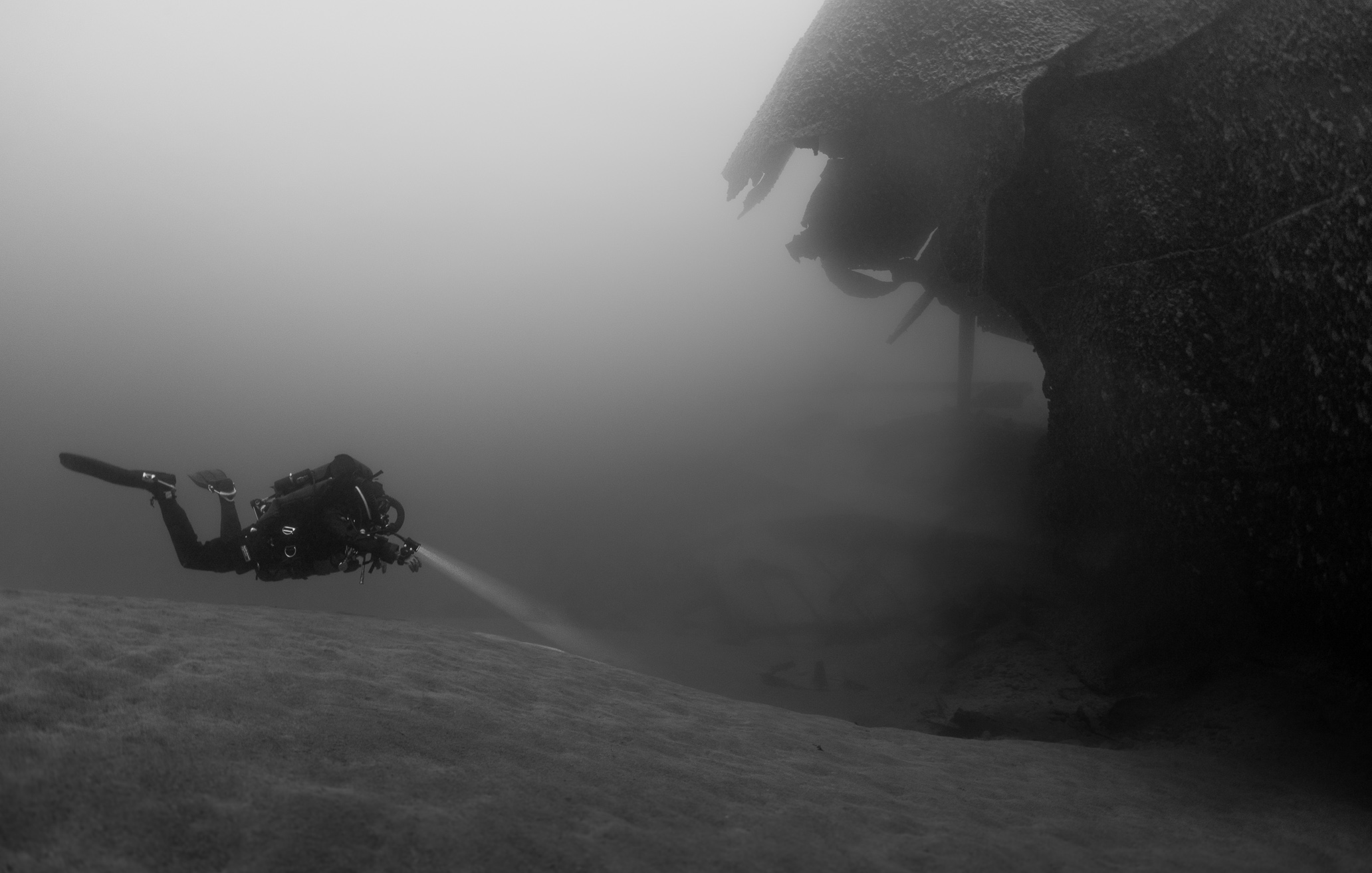
We deviated a little from our usual route, navigating toward what I now understand as the chain locker — the small compartment deep in the bow, where the anchor chain was stowed (sometimes called the “locker room” or “anchor locker” on old ships). On the Madeira, it’s reasonably accessible, even now in ruin, though the ship lies twisted across the lake bottom. Suspended just off the wreck, I watched Heather peer from the chain locker porthole, her face lit gently and set against the battered sweep of the Madeira’s steel.
For a little more context: the Madeira was a schooner-barge built in 1900, designed to carry heavy cargo like ore or lumber, towed behind a steamship rather than under its own power. On November 28, 1905, she was cast loose in a savage storm with 70–80 mph winds, crashed into Gold Rock off the Minnesota shore, and broke apart. Today, her remains lie scattered on the lakebed: her bow is upside down in shallower water, and her stern, complete with large winches and open hatches, lies on her starboard side at around 65 ft.
Heather’s beam slips across the tangled steel, a quiet handshake with a wreck that’s spent 120 Novembers in the cold. Down here, even the silence feels historical.
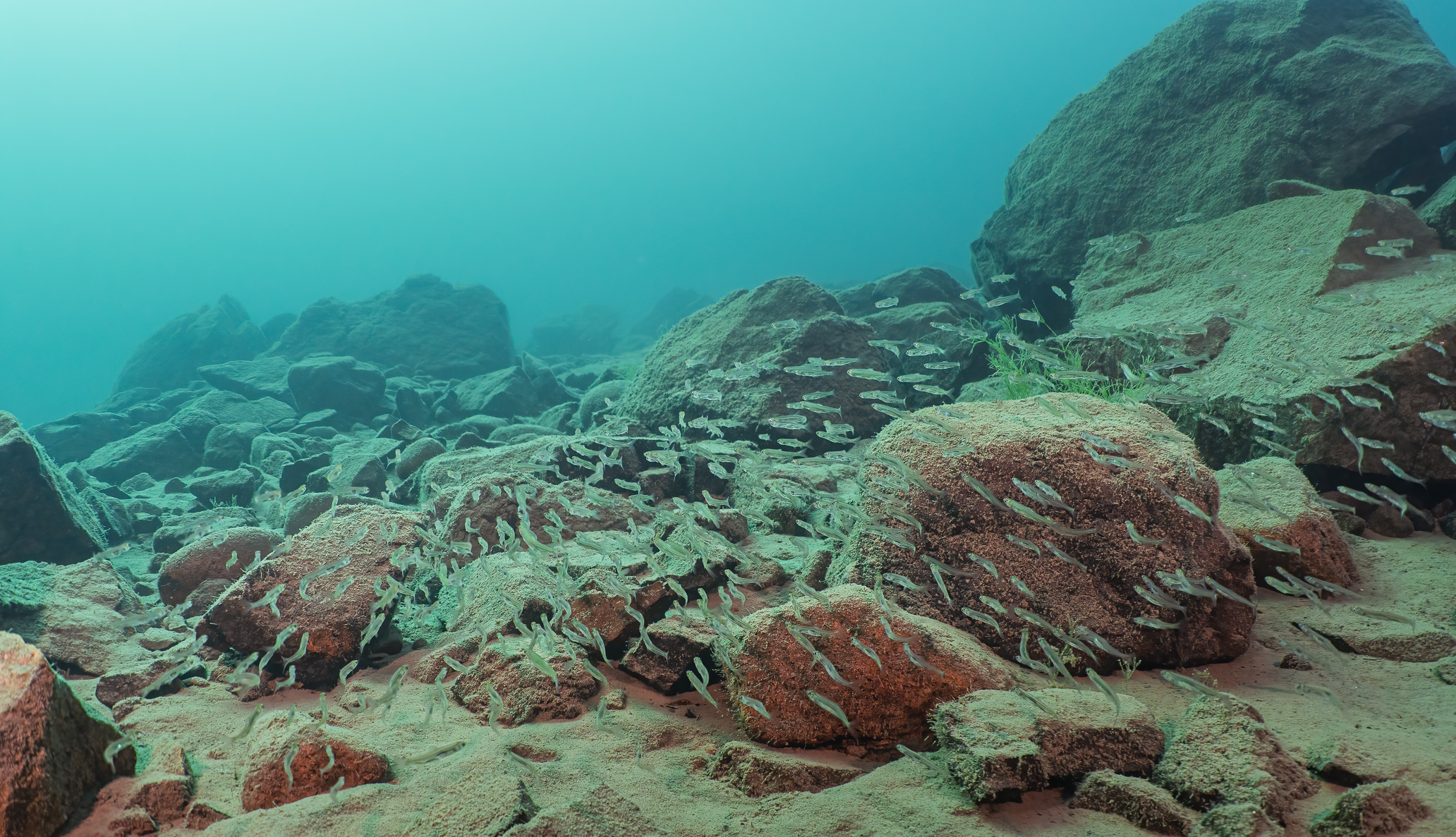
After photographing Heather in the chain locker, I turned my lens on some small schooling fish—smelt or herring, silvery shapes darting in the dim. We pressed on, deeper, until we reached the old wooden hatch around 120 ft. By then, we’d accumulated some decompression obligation, so we didn’t linger long before beginning our ascent.
We surfaced without incident—or so I thought. Climbing out, up the ladder to the platform, Heather collapsed onto the bench, looking utterly spent. She said she felt nauseous, pale, shaky. I helped her get out of her gear. A few minutes passed, and she began to recover, though she still looked drained. She insisted it was just her cold catching up, but a split second of dread flickered in my mind — the dreaded DCS. I worried, not without reason.
Decompression sickness (DCS) — the “bends” — happens when inert gas (usually nitrogen) that’s dissolved in body tissues under pressure forms bubbles as you ascend and reach lower pressure. These bubbles can trigger all sorts of symptoms, from joint pain (“the bends”) to neurological issues like tingling, weakness, fatigue, or even personality changes. Fortunately, in Heather’s case, her nausea eased, and she didn’t develop anything more ominous. I made her warm up in the car and told her to leave her rebreather behind.
Then came the real workout. I did four trips up the hill, each time full of gear — maybe 300 lbs total — hauling breathers, bottles, camera, and fins. My body felt like it had volunteered for a CrossFit pull-up challenge I’d never signed up for. By the third trip, my chest was pounding, lungs burning. I consciously slowed down, made more trips. It occurred to me that strenuous exercise after a dive is exactly the kind of thing that raises your risk of DCS.
To explain: right after a dive, your body is still off-gassing nitrogen. If you do heavy exercise — say climbing, carrying, lifting — that can disrupt that process. It may force more bubbles into your circulation, potentially even into arterial blood, which is riskier. Some studies even suggest that bouts of high-intensity exertion within a few hours of surfacing are particularly risky. Divers are generally advised to avoid strenuous activity for at least a few hours after surfacing.
Finally, once everything was squared away — Heather warm in the car, the gear packed, everything hauled uphill — I stood there, leaning against her truck, and the heat was blasting from the vents. As I walked up, the car was thundering with a dark, cathedral-sized organ piece—exactly the sort of soundtrack you’d expect when you’re still quietly wondering if your dive buddy has DCS.
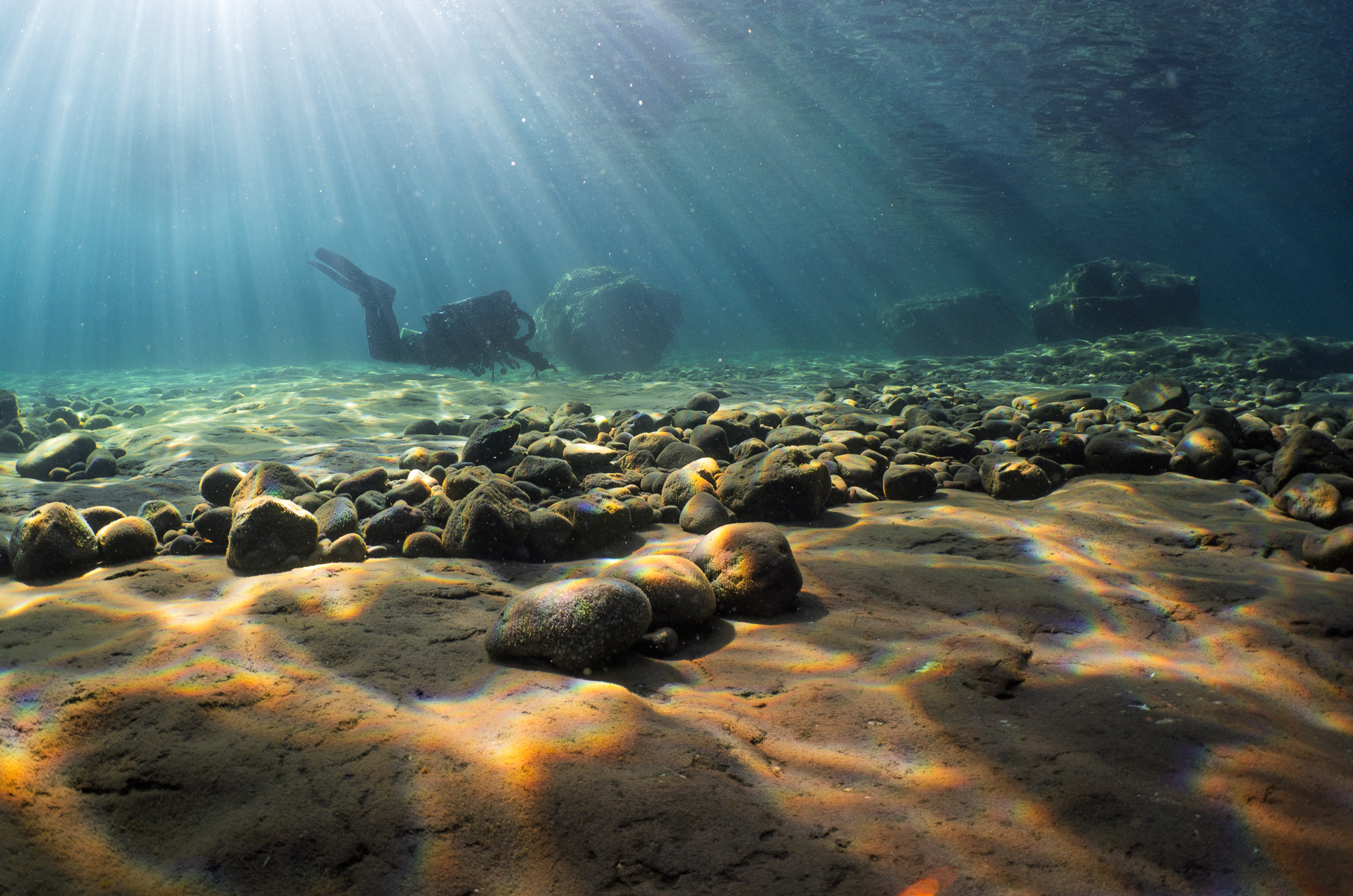
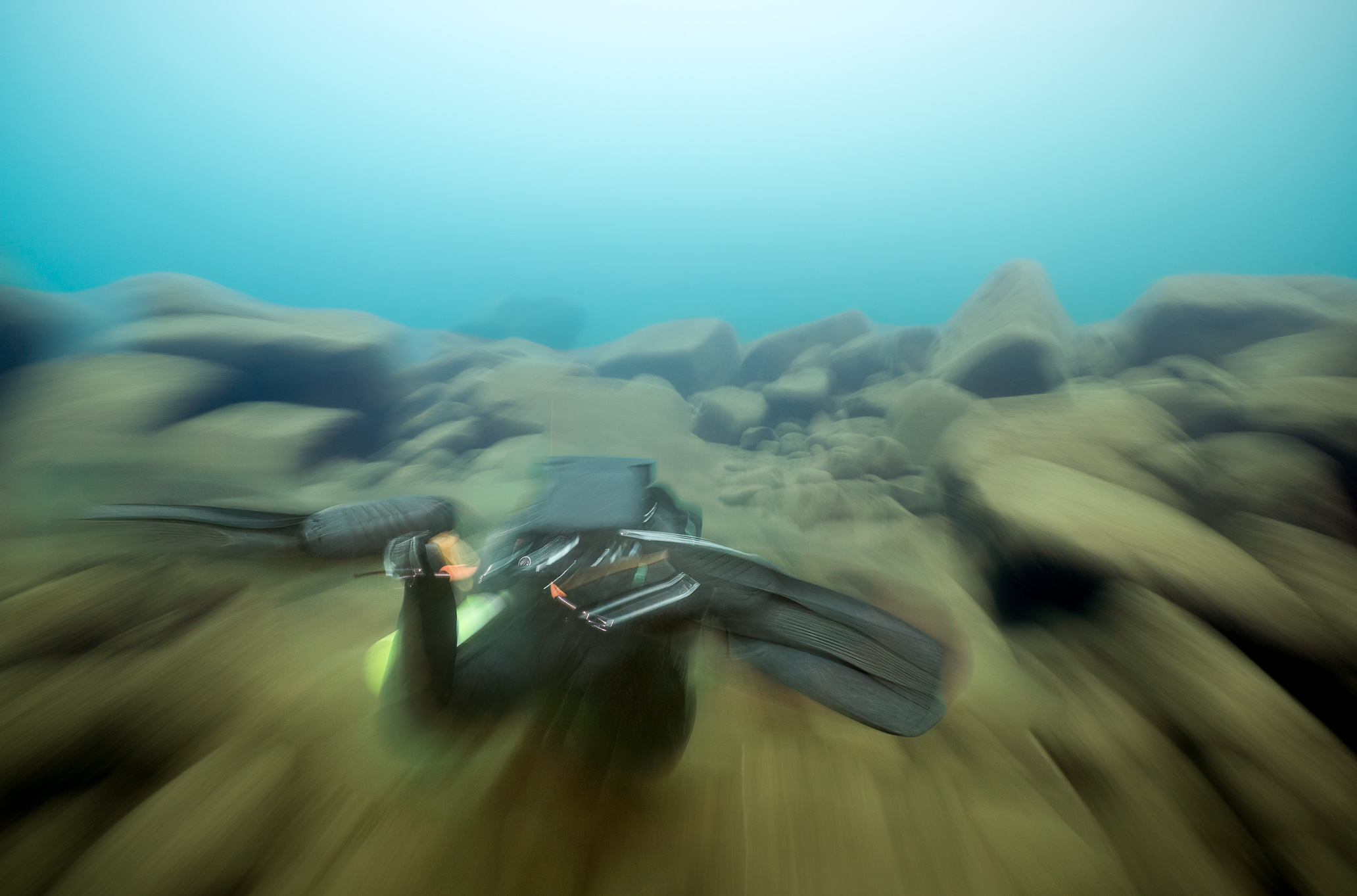
Our next dive was more relaxed — Gooseberry, in crisp, clear water, shafts of rainbow light dancing through the shallows. I always hope to spot sturgeon, given how many I’ve seen before, but not this time. Later in the week, the skies turned dour: gray drizzle, brisk air in the 30s. We dove from Brighton Beach instead of venturing further. Visibility was so-so, but I slowed my shutter speed and played with light, and motion.
Thanksgiving is coming up next week. Grace comes home tomorrow, Isabel later in the week, and we’ll join nearly twenty others in Motley around a long table. Grace is planning a Turkey Trot, which somehow feels entirely her: energetic, joyful, a little chaotic. It’s a week to look forward to.
And I have so much to be thankful for. Not wealth, exactly — I work every day, my savings won’t make the financial headlines. But rich? In the ways that matter to me, absolutely. I have delightful, curious kids, a loving wife who keeps our world bright, and enough time, enough money, to slip away into the underwater realm a couple of times a week. I don’t take that for granted — but I do forget, sometimes, just how lucky I am. As Thanksgiving nears, I’ll try harder to remember.