
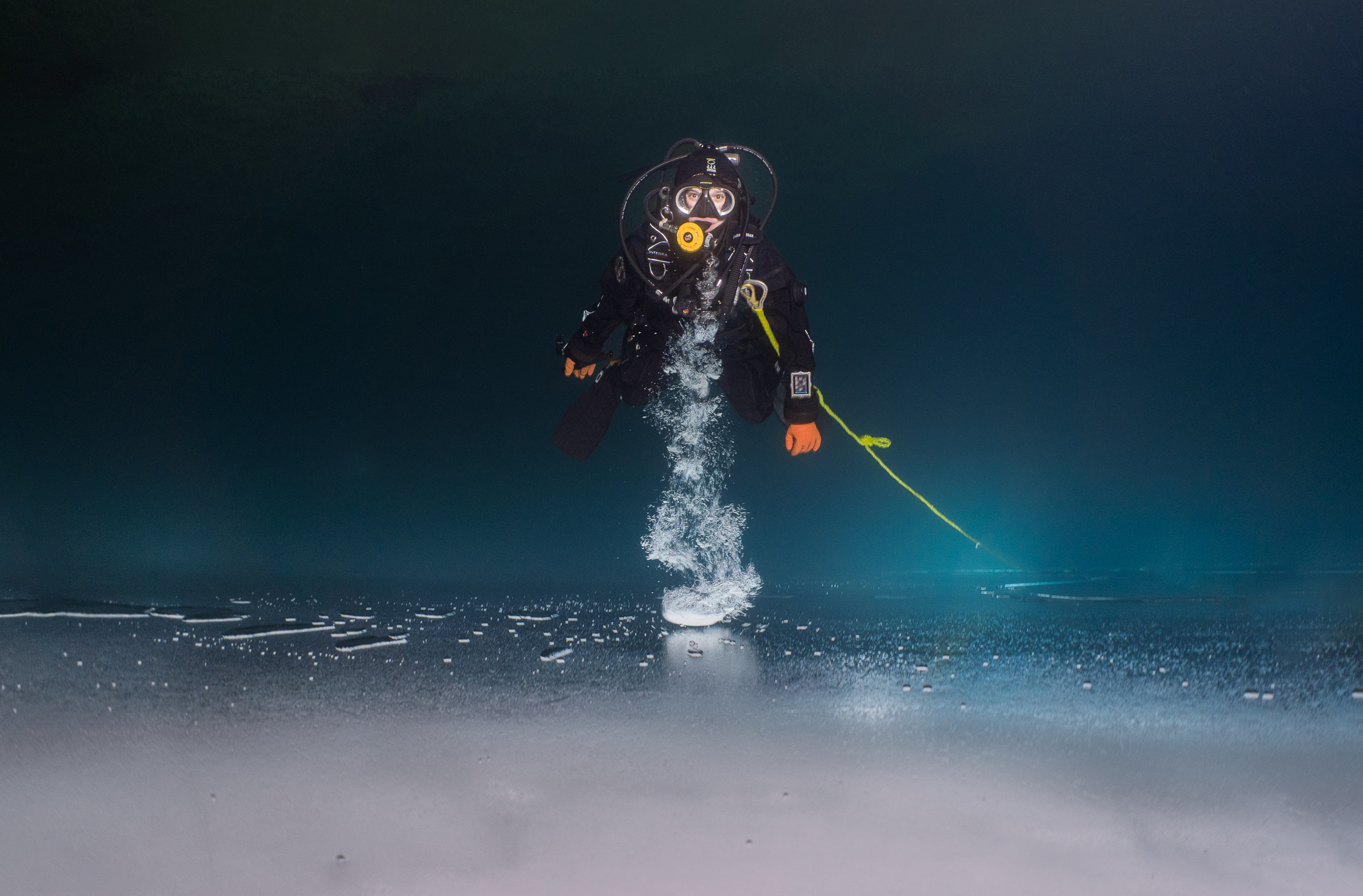
Standing on the Ceiling, Complaining About the Rope
A few months back I signed up for an ice diving course, which surprised even me. Not because of the cold — Lake Superior at a hundred feet in August is only a couple of degrees warmer than a frozen lake in February, so cold is simply the price of admission around here — but because the idea of diving on a leash held absolutely no appeal. Being tethered to a rope felt limiting, like underwater wandering with an invisible fence. Still, Heather wanted to take the class, and I figured this was one of those things worth trying once, if only to confirm my suspicions.
The weather, unusually, decided to be cooperative. We’d been stuck in a prolonged cold snap with temperatures plunging into the twenty- and thirty-below range for weeks, when suddenly — just before our ice diving weekend — things moderated into the teens and low twenties, which for Minnesota in January counts as a heat wave rather than a thaw.
The course began Friday night with a classroom session covering rope signals, roles, and safety basics. Ice diving is less about advanced technique and more about clear communication: a set of simple line signals for I’m okay, give me slack, take up slack, and something is wrong. Once that language is shared, the rest is surprisingly straightforward.
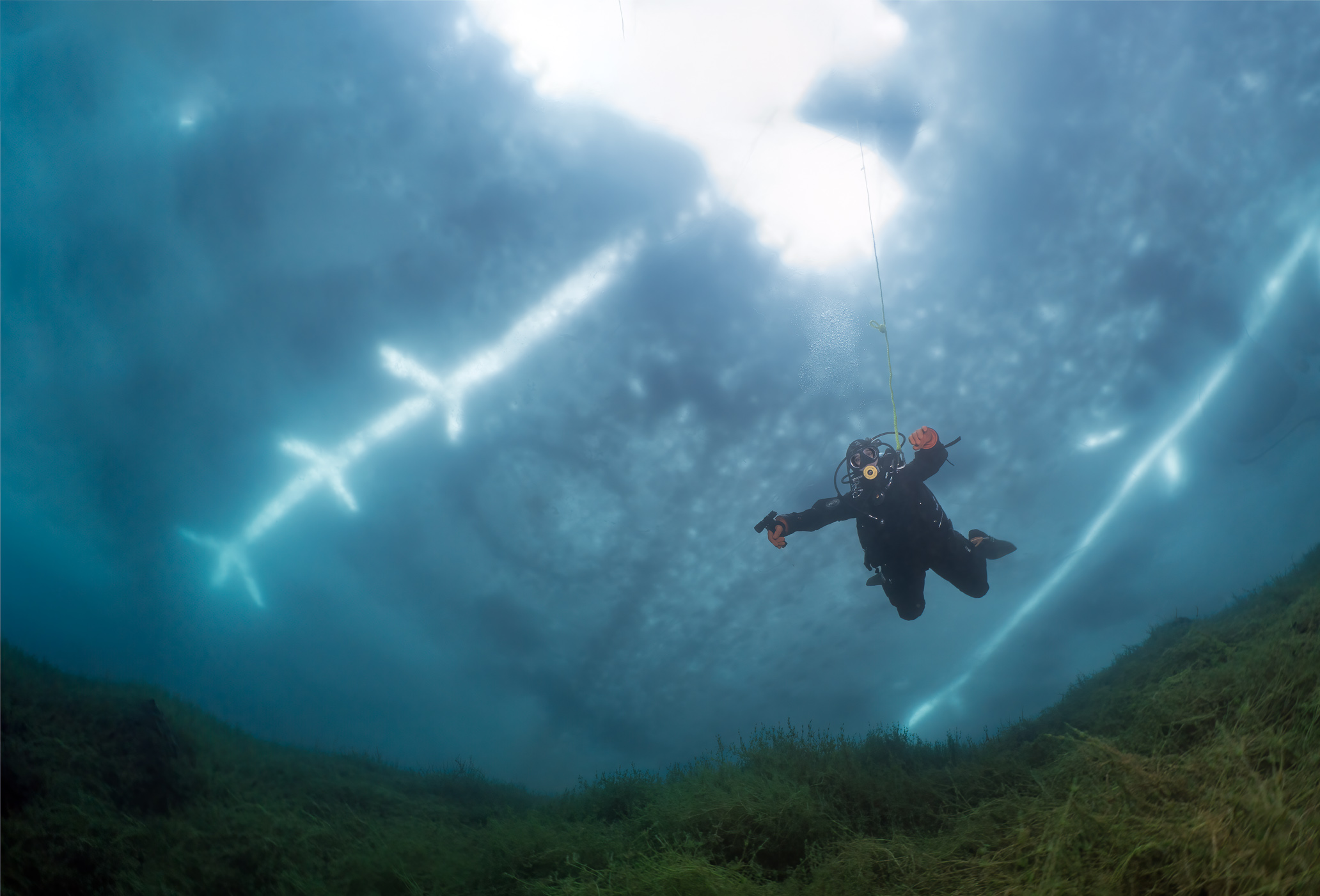
Like a diver in some alien cathedral, Heather drifts beneath the ice, while navigational symbols glow above like secret messages.
Saturday morning we were told to arrive at the lake around 9:30 or 10. Heather and I showed up at 9:45 and immediately felt wildly late. The hole had already been cut, the shelter pitched, and gear neatly staged on the ice. Everyone else had beaten us there. I felt a twinge of guilt for missing the setup — hauling sleds, drilling ice, and wrestling tents into place — while simultaneously appreciating that the hardest work had already been done. Within 45 minutes of arriving, we were pulling on drysuits and getting ready to dive, a pace that caught me off guard. I’d assumed preparation alone would consume most of the morning. Instead, I barely had time to finish my tea before we were heading for the hole.
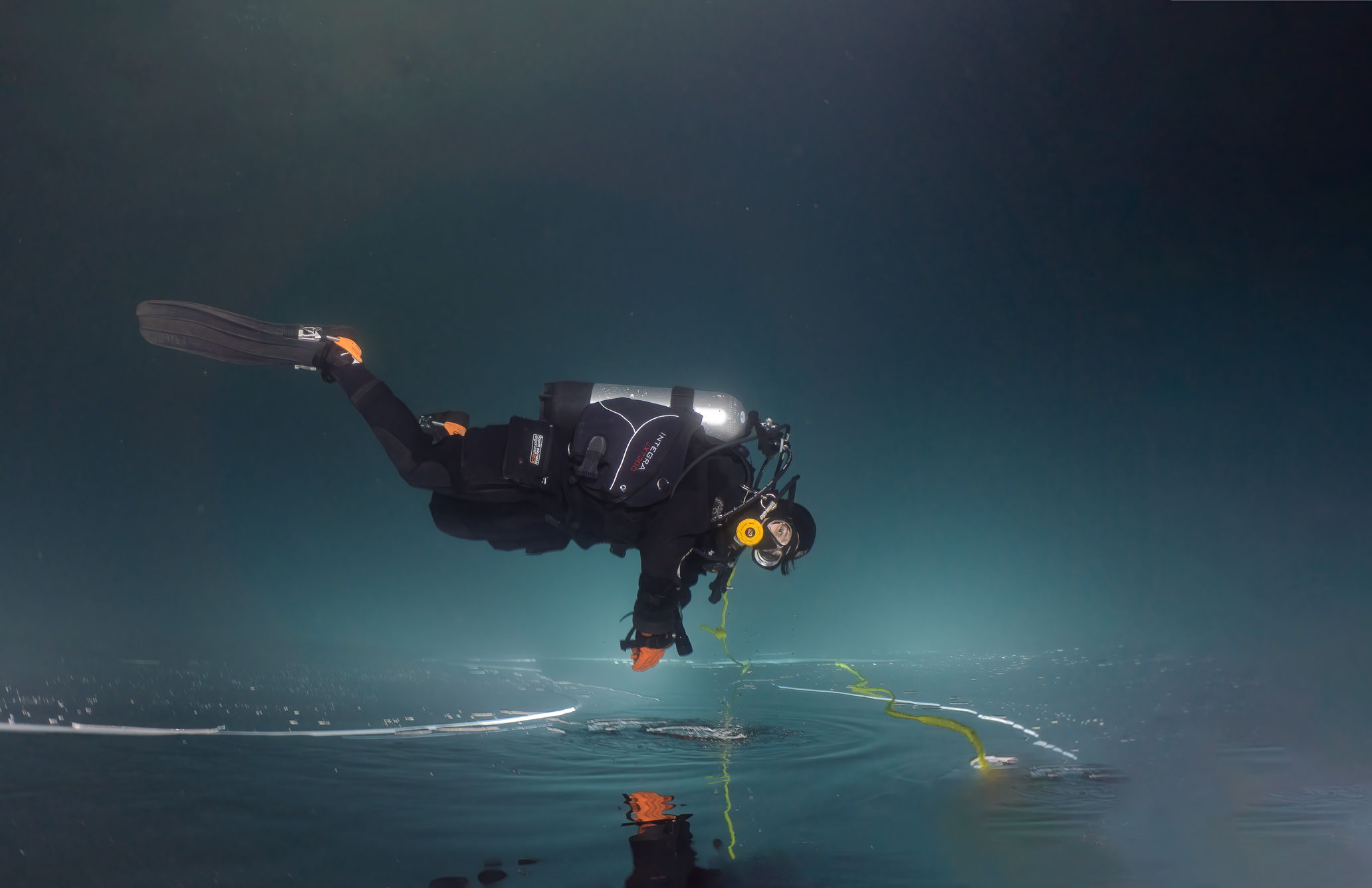
Heather floats inverted beneath the ice, bubbles forming a perfect mirrored ceiling — nature’s most delicate upside-down disco.
At one point, I found myself alone out on the ice with a fellow who wasn’t diving that day, there to support his wife. While the rest of the group was back at the vehicles — changing comfortably inside the heated cargo van Jorie had brought — this man took the opportunity to explain ice diving safety to me in great detail. He made sure I knew he was a divemaster. And an ice diving divemaster. This information was delivered with the gravity usually reserved for nuclear launch codes. The tone suggested I had done something wrong, though I wasn’t entirely sure what. I nodded, smiled, and tried to be agreeable while feeling faintly stranded and mildly lectured. Later, when I mentioned it to Jorie, he laughed and said the guy was a bit of a control freak who struggled when he wasn’t in charge. That explanation helped. Some mysteries resolve themselves that way.
Saturday’s dives were intentionally short — about 20 minutes — and for the first ice dives, cameras weren’t allowed, which made sense from a training perspective but left me feeling slightly underemployed. There was plenty to see, but without a camera I found myself wondering what, exactly, I was supposed to be doing down there besides being obedient to the rope and admiring the novelty of it all.
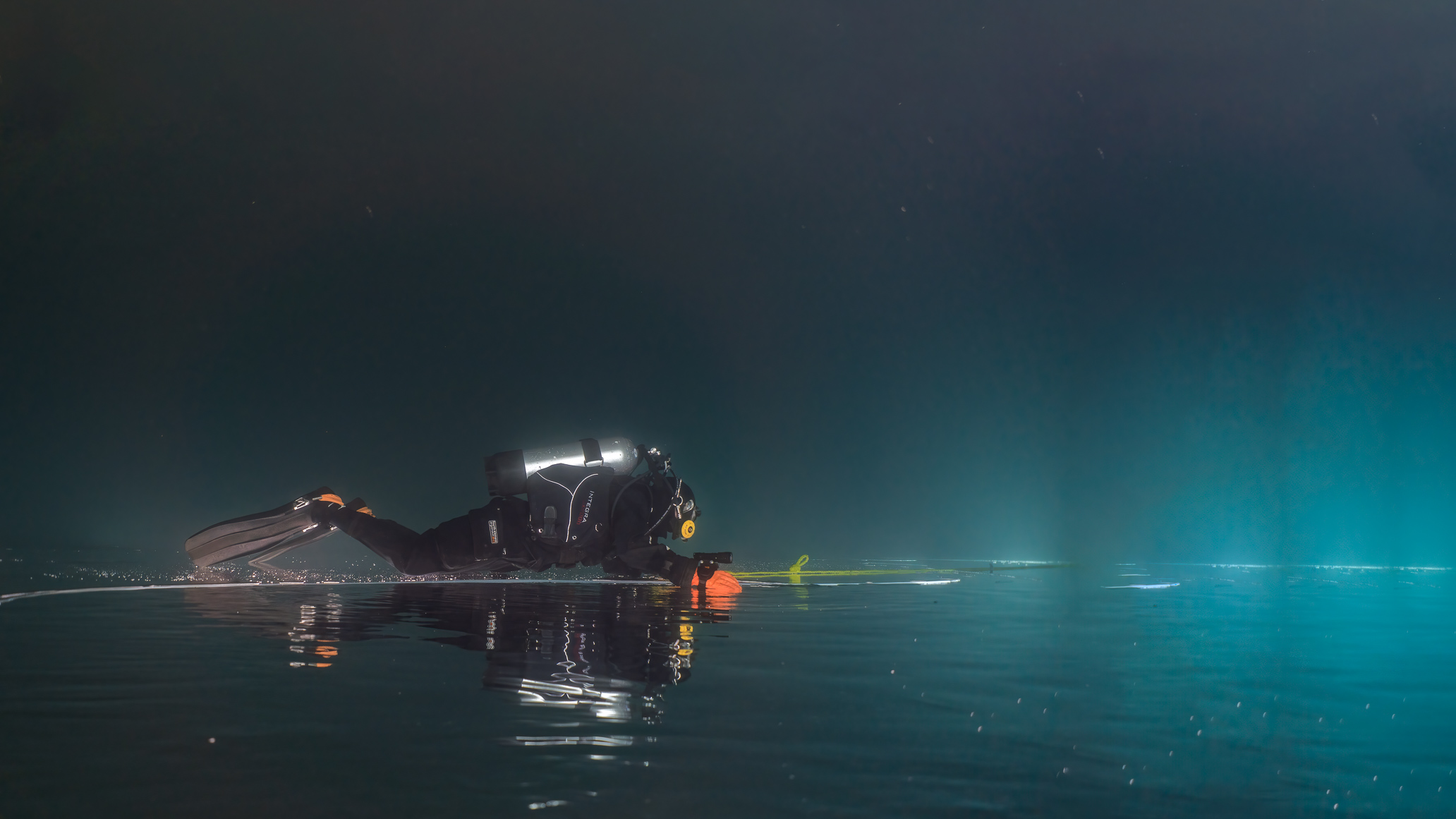
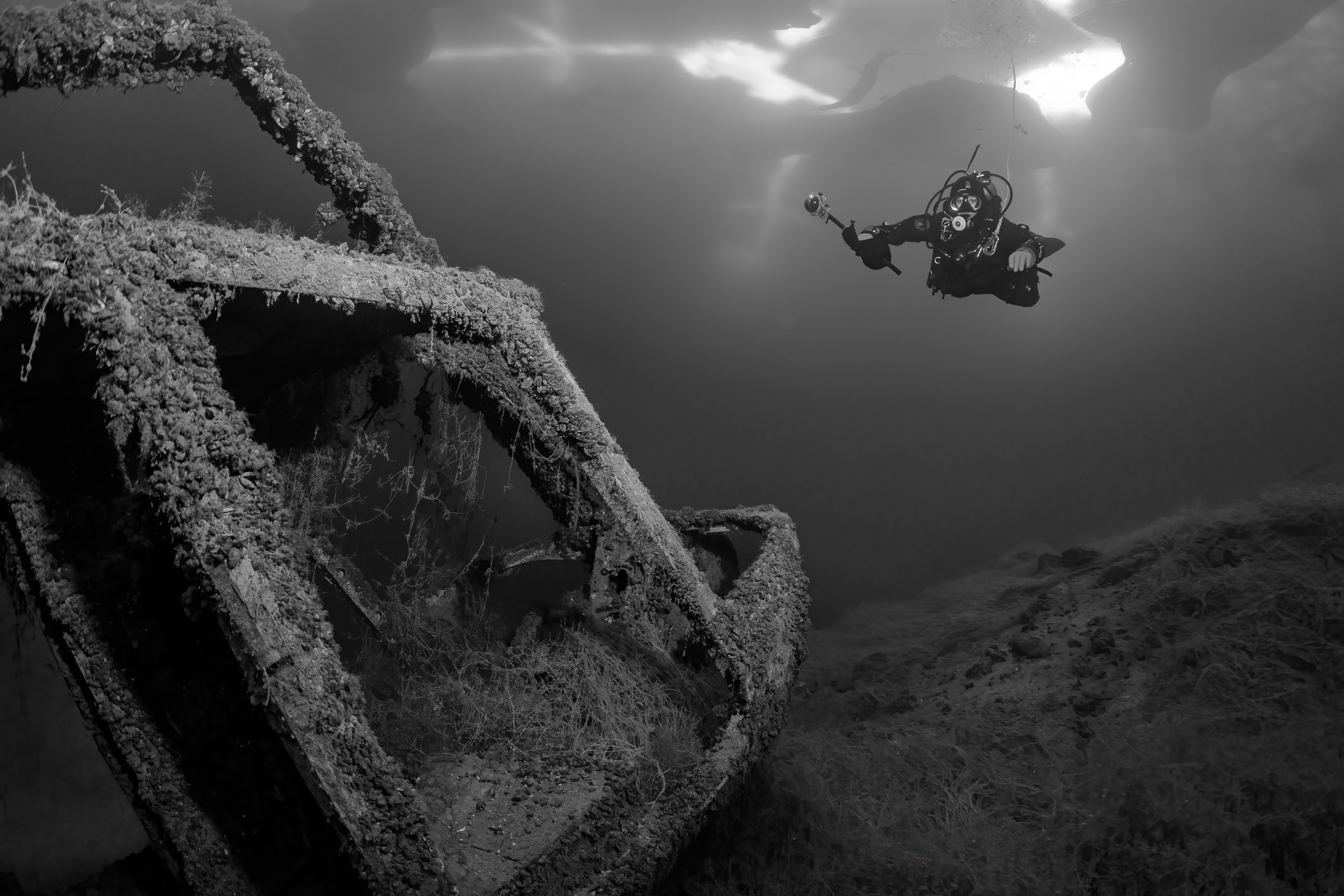
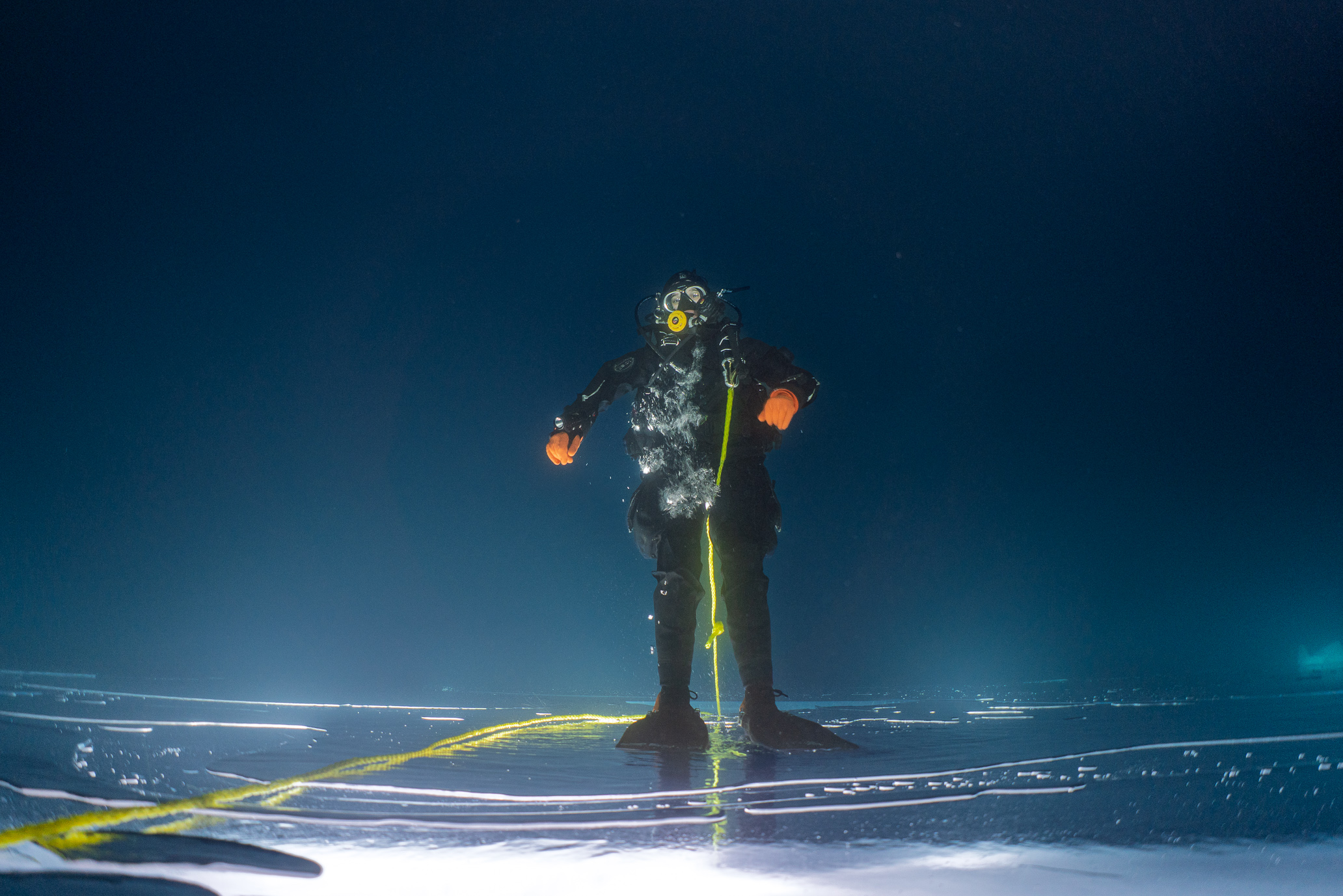
Sunday was where everything clicked. I brought both my still camera and the 360 camera, and Heather and I promptly discovered that the true joy of ice diving lies not below you, but above. Or rather, beneath the ice. When you flip upside down under a frozen lake, the ice becomes the visual ground. Light filters through snow and ice in strange, muted patterns, cracks form delicate lines overhead, and suddenly “up” and “down” lose their authority.
I spent much of the dive upside down beneath the ice, camera in hand, directing Heather as she positioned herself against the frozen ceiling. It felt less like exploration and more like a floating photo shoot, with the ice serving as the world’s most unlikely studio floor. Spend enough time inverted and your brain begins to accept this new orientation. Stand on it. Walk along it. Push off it. In photographs, bubbles drift downward, divers appear upright against a ceiling that now reads as ground, and for brief moments even I had to stop and ask myself which way was actually up.
Ice diving, I’ve decided, isn’t intimidating. It’s limiting — or at least it seems that way at first. But then again, my dog has plenty of fun on a leash. Maybe the problem wasn’t the tether, but my attitude toward it. Yes, ice diving is a logistical beast: cutting holes, managing lines, staging gear, coordinating people. But once you’re under the ice and fluent in line communication, the complexity fades. What’s left is play — upside down, sideways, laughing silently into a regulator — in a world where the ground is above you and gravity briefly loses the argument.
I lost about half the footage from the 360 camera — corrupted or vanished, as these things go — but what survived was enough to put together a short video from the weekend. Jorie liked it and shared it on the Unsalted Adventures page, which felt like a fitting punctuation mark on a weekend that had surprised me in the best way. I went in skeptical, convinced ice diving would feel restrictive and tedious. I came out thinking mostly about how much fun it is to stand on the underside of a frozen lake and call it ground.